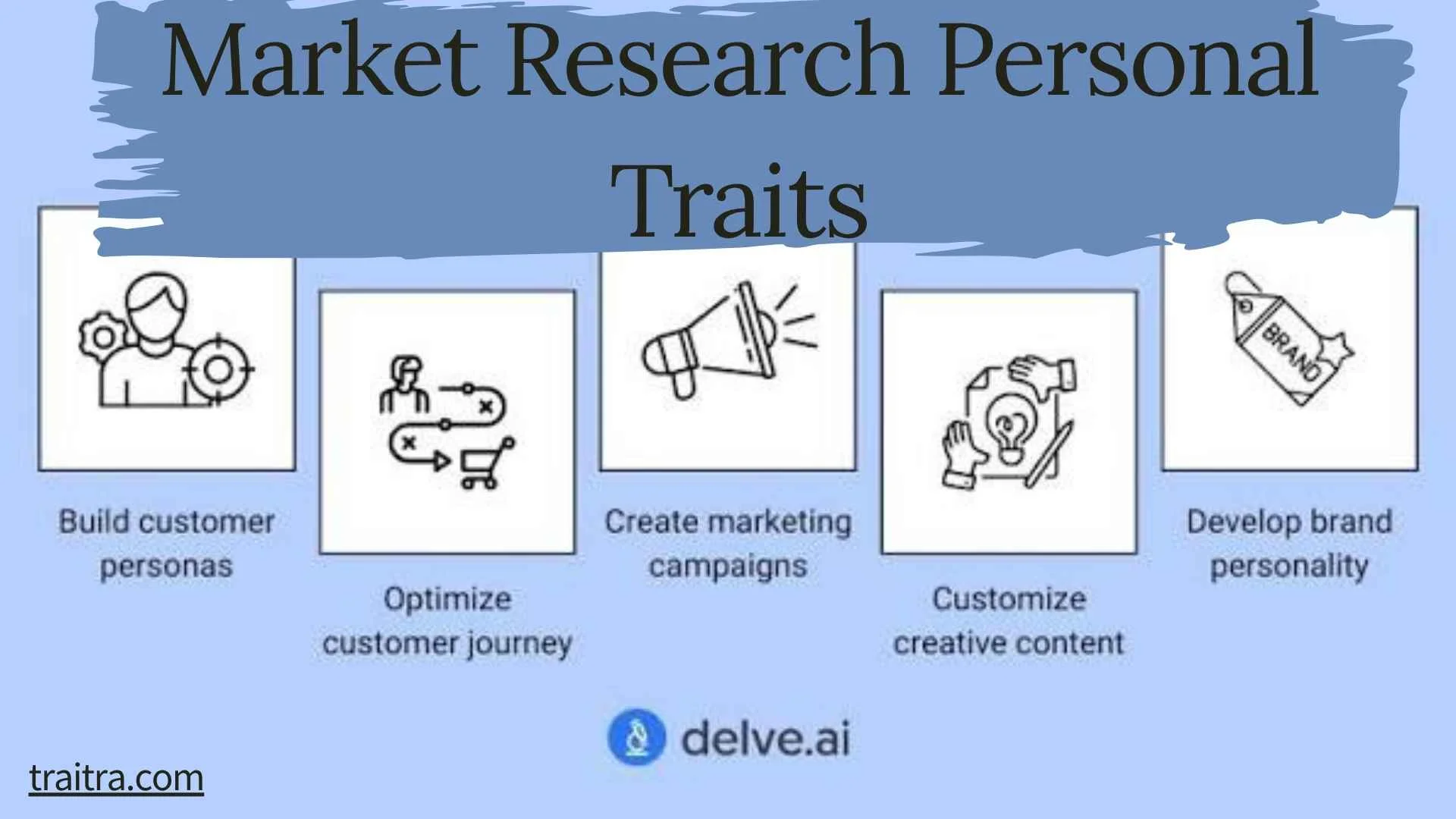
Market research personal traits are the qualities, behaviors, and professional characteristics that help people understand customers, analyze data, identify market trends, and make informed business decisions. The most important traits include curiosity, analytical thinking, attention to detail, communication, objectivity, adaptability, and ethical judgment. These qualities help market researchers turn customer opinions, survey responses, and industry information into useful business insights.
Whether you want to become a market researcher, improve your professional skills, or hire someone for a research role, understanding these characteristics can help you recognize what makes a researcher effective. Some traits support accurate data analysis, while others help researchers ask better questions, work with customers, and explain findings clearly.
This guide explores the essential personality traits of successful market researchers, how these qualities appear in everyday work, which skills can be developed, and how to identify the right traits for different market research roles.
Quick Answer: What Personal Traits Are Important in Market Research?
The most important personal traits for market research include:
- Curiosity: Encourages researchers to ask meaningful questions and investigate customer behavior.
- Analytical thinking: Helps identify patterns, relationships, and insights in research data.
- Attention to detail: Reduces errors in surveys, interviews, data collection, and reporting.
- Objectivity: Prevents personal opinions from unfairly influencing research findings.
- Communication: Makes it easier to collect reliable feedback and explain results.
- Critical thinking: Helps evaluate evidence, challenge assumptions, and interpret findings carefully.
- Adaptability: Supports responses to changing markets, customer preferences, and research methods.
- Empathy: Helps researchers understand customer needs, motivations, and frustrations.
- Persistence: Encourages thorough investigation when answers are unclear.
- Ethical judgment: Protects participants’ privacy and supports responsible use of information.
No single personality type guarantees success in market research. Effective researchers combine these qualities with technical skills, relevant experience, and a willingness to learn.
Market Research Personal Traits at a Glance
| Personal trait | Why it matters | Example in market research |
| Curiosity | Reveals unanswered questions | Investigating why customers stop using a service |
| Analytical thinking | Identifies patterns in data | Comparing purchase behavior across customer groups |
| Attention to detail | Improves research accuracy | Checking survey responses for errors |
| Objectivity | Reduces bias | Reporting unfavorable findings honestly |
| Communication | Improves data collection and reporting | Explaining research results to managers |
| Critical thinking | Tests assumptions | Questioning whether a sales increase reflects real demand |
| Empathy | Clarifies customer motivations | Understanding why a product feels difficult to use |
| Adaptability | Responds to changing conditions | Revising a study when customer behavior changes |
| Persistence | Supports thorough investigation | Exploring several explanations for declining sales |
| Organization | Keeps research on schedule | Managing interviews, deadlines, and datasets |
| Creativity | Generates useful research questions | Finding new ways to investigate customer problems |
| Integrity | Protects trust and accuracy | Keeping participant information confidential |
These traits work together rather than independently. Curiosity helps a researcher identify a question, analytical thinking helps examine the evidence, and communication helps turn the findings into a decision that others can understand.
1. Curiosity: The Foundation of Effective Market Research

Curiosity is the desire to understand why customers behave in certain ways, what influences their choices, and how markets change. It encourages researchers to look beyond obvious answers and investigate the reasons behind customer decisions.
A curious market researcher does not simply ask whether customers like a product. They explore what customers value, which problems remain unsolved, and what might persuade someone to choose an alternative.
How curiosity appears in market research
- Asking follow-up questions during customer interviews.
- Investigating unexpected survey results.
- Exploring why customers abandon online shopping carts.
- Comparing customer expectations with actual product experiences.
- Looking for unmet needs that competitors have overlooked.
Real-world example: A company notices that customers visit its online store but rarely complete purchases. Instead of assuming that prices are too high, a curious researcher investigates delivery fees, checkout difficulties, payment options, and customer trust.
The findings might reveal that customers are willing to pay the listed price but dislike unexpected shipping costs.
How to develop curiosity: Practice asking “why,” “what else,” and “what evidence would confirm this?” before accepting an explanation. Read customer reviews, compare different viewpoints, and keep a list of unanswered questions.
2. Analytical Thinking: Turning Data Into Useful Insights
Analytical thinking is the ability to organize information, recognize patterns, compare evidence, and draw reasonable conclusions. It helps market researchers transform raw information into findings that support business decisions.
Market research often involves survey results, sales figures, customer interviews, website behavior, competitor information, and industry reports. Analytical thinking helps connect these sources without confusing coincidence with cause and effect.
Why analytical thinking matters
A researcher may discover that sales increased after a company launched a new advertising campaign. However, the increase alone does not prove that the campaign caused the improvement. Seasonal demand, price changes, competitor shortages, or other factors may have contributed.
A strong analyst considers these alternative explanations before recommending a marketing strategy.
Real-world example: A fitness company receives positive feedback about a new subscription plan but experiences disappointing sales. An analytical researcher compares customer interest with actual purchases, price sensitivity, competing offers, and cancellation concerns.
The resulting recommendation may focus on affordability or plan flexibility rather than advertising alone.
How to develop analytical thinking:
- Learn basic statistics, percentages, averages, and data visualization.
- Compare results across customer groups.
- Separate observations from assumptions.
- Look for alternative explanations before reaching conclusions.
- Explain how the evidence supports each recommendation.
3. Attention to Detail: Protecting Research Accuracy
Attention to detail means noticing small errors, inconsistencies, and missing information that could affect the reliability of a study. This trait is essential because even a well-designed research project can produce misleading results if the data are collected or interpreted incorrectly.
A researcher must check questionnaire wording, response categories, sample characteristics, data entries, calculations, and report labels.
Examples of attention to detail
- Checking whether survey questions accidentally lead respondents toward a particular answer.
- Identifying duplicate responses in an online survey.
- Confirming that percentages use the correct denominator.
- Verifying dates and units in sales reports.
- Ensuring that a chart accurately represents the underlying data.
- Reviewing quotations before including them in a presentation.
Real-world example: A researcher compares customer satisfaction across two store locations. One location receives a higher satisfaction score, but the researcher notices that its survey includes more repeat customers than the other location’s survey.
That difference may affect the comparison. The researcher investigates the sample composition before claiming that one store delivers a better experience.
How to improve this trait: Use repeatable quality checks, document assumptions, validate calculations, and review important findings before publication. Attention to detail should improve accuracy without turning every minor decision into an unnecessary delay.
4. Objectivity: Separating Evidence From Personal Opinions
Objectivity is the ability to evaluate evidence fairly, even when the findings conflict with personal preferences or business expectations. It helps researchers avoid allowing their own beliefs to shape the conclusions of a study.
Market researchers sometimes investigate products they personally enjoy, campaigns they helped create, or business strategies favored by senior managers. These situations can create pressure to interpret results positively.
An objective researcher follows the evidence instead.
How objectivity improves research
- Questions assumptions before accepting them.
- Reports negative and positive findings fairly.
- Considers evidence that challenges an initial hypothesis.
- Uses consistent criteria when comparing competitors.
- Distinguishes customer opinions from measured behavior.
- Explains uncertainty rather than overstating confidence.
Real-world example: A research team expects younger customers to prefer a mobile-only banking service. Interviews reveal that many participants value mobile access but still want human support for complicated financial problems.
An objective report presents both preferences instead of forcing the findings to match the original expectation.
How to strengthen objectivity: Write down assumptions before beginning a study, establish evaluation criteria in advance, and actively look for evidence that could disprove your preferred explanation.
5. Communication Skills: Explaining Findings Clearly
Communication is the ability to ask questions, listen carefully, write clearly, and present information in a way that other people can understand. Market researchers need this trait because their work connects customers, data, and business decisions.
Good communication involves more than speaking confidently. It includes asking neutral questions, interpreting customer feedback carefully, writing useful reports, and explaining technical information without unnecessary jargon.
Communication in different research activities
| Research activity | Communication trait required | Practical example |
| Customer interviews | Active listening | Allowing participants to explain their frustrations |
| Survey design | Clear writing | Using questions that respondents can understand |
| Focus groups | Facilitation | Giving quieter participants room to speak |
| Data reporting | Conciseness | Summarizing the most important findings |
| Client presentations | Confidence and clarity | Explaining why a proposed strategy deserves consideration |
| Team collaboration | Constructive discussion | Resolving differences about research methods |
Real-world example: A researcher discovers that customers find a software product difficult to navigate. Rather than presenting dozens of technical charts, the researcher explains the three main usability problems, provides supporting evidence, and recommends specific changes.
The result is easier for the product team to act on.
How to improve communication: Practice writing one-paragraph summaries, presenting charts aloud, asking open-ended interview questions, and explaining research findings to people without a technical background.
6. Critical Thinking: Challenging Assumptions and Testing Conclusions
Critical thinking involves examining evidence, questioning assumptions, evaluating arguments, and deciding whether a conclusion is justified. Although it overlaps with analytical thinking, it places greater emphasis on the quality of reasoning behind a claim.
Analytical thinking helps a researcher identify a pattern. Critical thinking helps determine whether that pattern supports the proposed explanation.
Critical-thinking questions market researchers should ask
- Is the sample representative of the intended audience?
- Could the wording of a question have influenced the answers?
- Does stated purchase intent reflect actual buying behavior?
- Are the findings based on enough relevant evidence?
- Could another factor explain the observed pattern?
- What information would change this recommendation?
Real-world example: A survey suggests strong interest in a premium coffee machine. Before recommending a launch, the researcher examines whether respondents understand the price, have access to competing products, and have demonstrated a willingness to pay for similar items.
This prevents a company from treating general enthusiasm as proof of market demand.
How to develop critical thinking: Compare multiple explanations, assess the quality of evidence, identify limitations, and state what remains unknown.
7. Empathy: Understanding Customers Beyond the Numbers
Empathy is the ability to understand another person’s perspective, needs, emotions, and circumstances. In market research, it helps professionals investigate the reasons behind customer behavior without assuming that everyone thinks or acts the same way.
Empathy is particularly valuable in interviews, focus groups, usability testing, customer experience research, and product development.
Why empathy matters
Customers do not always explain their needs in precise business language. They may describe frustration, inconvenience, uncertainty, or a workaround rather than identify the underlying problem.
An empathetic researcher listens for these signals and asks respectful follow-up questions.
Real-world example: A grocery delivery service receives complaints about late deliveries. Interviews reveal that some customers depend on delivery windows to coordinate childcare or work breaks.
The problem is not merely delivery speed. It is the lack of predictable timing. A narrower delivery window and better delay notifications may address the actual customer need.
How to build empathy:
- Listen without interrupting.
- Avoid judging customers for their preferences.
- Ask participants to describe specific experiences.
- Notice recurring frustrations and workarounds.
- Check your interpretation with the evidence rather than assuming you understand someone’s motives.
Empathy should support understanding, not replace systematic research or encourage researchers to treat a few personal experiences as representative of an entire market.
8. Adaptability: Responding to Changing Markets
Adaptability is the ability to adjust methods, priorities, and interpretations when circumstances change. Markets are influenced by new technology, economic conditions, competitor actions, cultural shifts, and changing customer expectations.
A researcher who can adapt is better prepared to respond when an original research plan no longer fits the problem.
Adaptability in practice
- Revising interview questions after discovering a new customer concern.
- Learning a new analytics tool when project needs change.
- Adjusting recruitment methods when the target audience is difficult to reach.
- Updating a forecast when new evidence becomes available.
- Exploring alternative research methods when a survey produces incomplete answers.
Real-world example: A retailer plans to investigate in-store shopping habits. A major renovation temporarily closes several locations, changing how customers shop. The researcher supplements the original plan with online interviews and digital purchase data while clearly documenting the change in methods.
How to develop adaptability: Stay open to new evidence, learn transferable research skills, and document changes to the research plan so that flexibility does not undermine consistency.
9. Persistence: Investigating Problems Thoroughly
Persistence is the willingness to continue working toward a reliable answer when the evidence is incomplete, contradictory, or difficult to obtain.
Market research rarely produces perfect information immediately. Participants may provide vague answers, datasets may contain gaps, and early findings may raise more questions than they resolve.
Persistence helps researchers investigate these problems rather than settling for the easiest explanation.
Real-world example: A software company notices a rise in cancellations. The first round of customer feedback points to pricing, but a second round of interviews reveals that customers also struggle with onboarding.
A persistent researcher investigates both explanations and compares them with cancellation records before recommending changes.
How to develop persistence: Break large questions into smaller tasks, keep a record of unresolved issues, set realistic deadlines, and know when the evidence is sufficient to make a decision.
Persistence does not mean continuing indefinitely. Researchers should recognize when additional investigation is unlikely to change the decision.
10. Organization and Time Management: Keeping Research on Track
Organization is the ability to manage information, priorities, records, and deadlines. Time management helps researchers complete essential tasks without sacrificing quality.
Market research projects often involve several activities at once: planning a study, recruiting participants, conducting interviews, cleaning data, analyzing results, and preparing presentations.
Without organization, important details can be missed and deadlines can slip.
Useful organizational habits
- Maintain a research calendar with milestones.
- Store interview notes and datasets in a consistent structure.
- Track participant recruitment and consent.
- Record research decisions and methodological changes.
- Set aside time for data validation.
- Separate urgent tasks from important but nonurgent work.
Real-world example: A researcher coordinating a customer survey across several regions uses a tracking sheet to monitor recruitment, response rates, quality checks, and analysis deadlines. This makes it easier to identify delays before they affect the final report.
How to improve organization: Use checklists, project management tools, clear file names, and documented workflows. The goal is not to create more administration; it is to make research easier to verify, repeat, and complete.
11. Creativity: Finding Better Questions and New Opportunities
Creativity helps market researchers develop original questions, explore unfamiliar customer problems, and identify opportunities that standard approaches might overlook.
It is especially useful when customers struggle to describe what they want or when a company needs to understand a market that has not yet developed fully.
Creativity must still be supported by evidence. An imaginative idea is a starting point for investigation, not proof that a business opportunity exists.
Real-world example: A company selling reusable water bottles wants to understand why customers stop using them. Instead of asking only about color and price, a creative researcher explores cleaning difficulty, portability, leaking, and whether the bottle fits common cup holders.
This broader set of questions may reveal a product improvement that a conventional satisfaction survey would miss.
How to develop creativity: Explore customer reviews, observe how people use products, brainstorm several explanations before choosing one, and test promising ideas through interviews or experiments.
12. Ethical Judgment and Integrity: Protecting Trust
Ethical judgment is the ability to recognize and respond to questions involving privacy, fairness, honesty, consent, and responsible data use. Integrity means reporting findings truthfully and following appropriate research practices, even when doing so is inconvenient.
Researchers may work with personal information, sensitive opinions, purchasing histories, or recordings of interviews. Their decisions can affect both participants and the organizations relying on the findings.
Ethical traits in market research
- Obtaining appropriate consent before collecting information.
- Explaining the purpose of a study accurately.
- Protecting confidential participant records.
- Avoiding misleading or manipulative questions.
- Reporting limitations and unfavorable results honestly.
- Using customer information only in ways that are authorized and appropriate.
- Avoiding unsupported claims about groups of consumers.
Real-world example: A client asks a researcher to remove unfavorable survey responses because they weaken a proposed campaign. A researcher with strong integrity explains why excluding valid responses would distort the findings and offers to investigate whether a legitimate data-quality issue exists.
How to strengthen ethical judgment: Follow applicable privacy requirements, use approved research procedures, limit access to sensitive records, document exclusions, and seek guidance when a decision raises ethical concerns.
13. Patience and Active Listening: Getting Beyond Surface Answers

Patience and active listening help researchers collect thoughtful responses rather than rushing participants toward convenient conclusions.
Customers may need time to remember an experience, explain a complex decision, or feel comfortable discussing a frustrating interaction. Interrupting too quickly can prevent researchers from discovering important information.
Active listening means concentrating on what someone says, noticing relevant details, and asking follow-up questions that clarify meaning.
Real-world example: During a product interview, a participant initially says that an app is “confusing.” Instead of moving to the next question, the researcher asks the participant to describe the last time the app caused a problem.
The participant explains that important settings are hidden in several menus. This specific observation provides more useful evidence than the original general complaint.
How to improve: Allow pauses, avoid leading questions, paraphrase important points for confirmation, and ask participants to describe real situations rather than only offer broad opinions.
14. Intellectual Humility: Knowing What the Data Cannot Tell You
Intellectual humility is the willingness to acknowledge uncertainty, recognize the limits of your knowledge, and revise a conclusion when stronger evidence appears.
This trait is especially important because market research often deals with incomplete information and changing behavior. Even a carefully designed study cannot answer every question.
Real-world example: A small group of customers strongly prefers a new packaging design. A researcher reports that the design performed well in the interviews but avoids claiming that the entire market will prefer it until broader testing is completed.
Intellectual humility makes findings more trustworthy because it distinguishes what researchers know from what they suspect.
How to develop it: State confidence levels in plain language, identify limitations, invite constructive criticism, and update recommendations when new evidence warrants a change.
15. Confidence and Decision-Making: Turning Findings Into Action
Confidence helps researchers communicate evidence-based recommendations, while sound decision-making helps them choose appropriate actions when information is incomplete.
Market researchers do not always have perfect data. They must often explain the strongest available evidence, identify risks, and recommend the next step without pretending to know the future.
Real-world example: A company is deciding between two product designs. Research suggests that one design is easier to use, while the other costs less to manufacture. A confident researcher explains the trade-offs and recommends a limited product test rather than presenting either option as unquestionably superior.
To strengthen these traits, practice presenting recommendations with three elements: the evidence, the reasoning, and the remaining uncertainty.
16. Collaboration: Working Effectively With Different Teams
Collaboration is the ability to share information, respect different viewpoints, and work toward a common goal. Market research often requires cooperation among analysts, marketing managers, product designers, sales teams, executives, and external research partners.
A collaborative researcher understands that different teams need different insights. A product designer may need detailed usability findings, while a business leader may need a concise explanation of market demand and financial risk.
Real-world example: A researcher discovers that customers want simpler product packaging. The marketing team focuses on shelf appeal, the design team considers usability, and the operations team evaluates production costs. The researcher helps these teams compare their priorities against customer evidence.
How to develop collaboration: Share findings early, invite feedback, clarify responsibilities, and explain disagreements using evidence rather than personal criticism.
17. Comfort With Uncertainty: Working With Incomplete Information
Market research frequently deals with uncertainty. Customer preferences can change, samples may be limited, and competitors can introduce new products before a study is complete.
Comfort with uncertainty means being able to work carefully without demanding an immediate, perfectly certain answer.
This trait does not mean accepting weak evidence. It means understanding what the available information can support and choosing a reasonable next step.
Real-world example: A startup wants to enter a new market, but reliable customer data are limited. Rather than making a large investment based on assumptions, a researcher recommends a small pilot, targeted interviews, and a test of actual purchasing behavior.
How to develop this trait: Separate known facts from assumptions, estimate the consequences of being wrong, and use small experiments to reduce uncertainty before making larger commitments.
Which Personal Traits Matter Most for Different Market Research Roles?
The most valuable traits depend on the type of research a person performs. All researchers benefit from accuracy and ethical judgment, but some roles place greater demands on particular qualities.
| Market research role | Most important traits | Why they matter |
| Market research analyst | Analytical thinking, accuracy, critical thinking | Interprets data and evaluates market conditions |
| Consumer insights researcher | Curiosity, empathy, active listening | Investigates customer needs and motivations |
| Survey researcher | Attention to detail, objectivity, organization | Designs questions and protects data quality |
| Qualitative researcher | Patience, communication, empathy | Conducts interviews and interprets experiences |
| Quantitative researcher | Precision, logical reasoning, persistence | Analyzes numerical data and tests relationships |
| Competitive intelligence analyst | Curiosity, skepticism, adaptability | Evaluates competitors and changing market conditions |
| Market research manager | Leadership, communication, decision-making | Guides projects and turns findings into strategy |
| Product research specialist | Creativity, observation, collaboration | Identifies user problems and product opportunities |
The U.S. Bureau of Labor Statistics identifies analytical skills, communication skills, critical thinking, and attention to detail as important qualities for market research analysts. Its occupational description also emphasizes gathering information, evaluating market conditions, and communicating findings.
Bureau of Labor Statistics
+1
Positive and Challenging Traits in Market Research
Some traits support research quality when used appropriately but can create problems when taken too far. Recognizing this balance helps professionals develop strengths without letting them interfere with their work.
| Trait | Positive application | Potential downside | How to maintain balance |
| Curiosity | Discovers overlooked questions | Endless investigation | Define the research objective |
| Perfectionism | Encourages careful checking | Delays delivery | Set quality standards and deadlines |
| Skepticism | Prevents unsupported conclusions | Rejects useful evidence too quickly | Evaluate evidence fairly |
| Empathy | Reveals customer needs | Overgeneralizes from personal stories | Validate themes across relevant data |
| Confidence | Supports clear recommendations | Creates overconfidence | State limitations and uncertainty |
| Persistence | Investigates difficult problems | Wastes effort on low-value questions | Use decision-focused stopping rules |
| Creativity | Generates fresh ideas | Encourages speculation | Test ideas with evidence |
| Sociability | Supports interviews and teamwork | Can dominate discussions | Make space for quieter participants |
| Caution | Reduces avoidable mistakes | Slows reasonable decisions | Match the level of checking to the risk |
| Independence | Encourages initiative | Limits collaboration | Invite peer review and feedback |
Key insight: A trait is not automatically beneficial in every situation. Strong researchers know when to use a quality, when to moderate it, and when to rely on a complementary skill.
Personal Traits vs. Professional Skills in Market Research
Personal traits and professional skills are closely related, but they are not the same. Traits describe tendencies in how a person approaches work, while skills describe abilities developed through learning and practice.
| Personal trait | Related professional skill | Example |
| Curiosity | Interviewing | Asking useful follow-up questions |
| Analytical thinking | Statistical analysis | Comparing customer segments |
| Organization | Project management | Coordinating research deadlines |
| Communication | Report writing | Summarizing findings for executives |
| Creativity | Research design | Developing alternative ways to test an idea |
| Objectivity | Bias assessment | Reviewing whether a survey question is leading |
| Persistence | Data validation | Investigating unexplained inconsistencies |
| Ethical judgment | Data governance | Handling participant records appropriately |
Traits may make certain skills easier to practice, but they do not replace training. A naturally curious person still needs to learn research methods, and a detail-oriented person still needs to understand how to validate a dataset.
Market Research Personality Traits and the Big Five Model
The Big Five personality model describes personality across five broad dimensions: openness to experience, conscientiousness, extraversion, agreeableness, and neuroticism, sometimes described in terms of emotional stability.
These dimensions can offer a useful framework for reflecting on work preferences. However, they are not a checklist that determines whether someone can become a successful market researcher.
| Big Five dimension | Possible relevance to market research | Important consideration |
| Openness to experience | Supports curiosity, creativity, and exploration | New ideas still need evidence |
| Conscientiousness | Supports organization, reliability, and careful checking | Excessive rigidity can limit flexibility |
| Extraversion | May help with interviews, workshops, and presentations | Introverted researchers can communicate effectively too |
| Agreeableness | Can support cooperation and respectful interviews | Researchers must still challenge unsupported claims |
| Emotional stability | May help when facing criticism or uncertain findings | Stress management can be learned and improved |
A researcher does not need to be highly extroverted to succeed. Some roles involve frequent interviews and presentations, while others emphasize independent analysis, data quality, and written reporting.
The most useful question is not which personality type is best, but which behaviors and skills a particular role requires.
10 Real-Life Examples of Market Research Personal Traits
The following scenarios show how research qualities translate into practical workplace behavior.
1. Curiosity during customer interviews
A researcher asks why a customer prefers one brand over another and discovers that easy product returns matter more than advertising or packaging.
2. Analytical thinking in sales research
An analyst compares regional sales, prices, and promotional activity to determine whether higher revenue reflects stronger demand or a temporary discount.
3. Attention to detail in surveys
A researcher catches a response option that was accidentally omitted from a questionnaire before the survey reaches the full audience.
4. Objectivity in a product launch
A researcher reports weak customer interest despite management’s enthusiasm for the proposed product.
5. Empathy in customer experience research
An interviewer learns that customers abandon an application because they feel uncertain about sharing personal information.
6. Creativity in product research
A team studies how customers actually store and transport a product rather than limiting its questions to appearance and price.
7. Critical thinking in demand forecasting
An analyst questions a forecast that assumes last month’s growth will continue despite an upcoming seasonal slowdown.
8. Organization during a survey project
A project coordinator tracks participant recruitment and data checks to prevent a late-stage reporting delay.
9. Integrity when reporting results
A researcher discloses a sampling limitation rather than presenting a small study as representative of every customer.
10. Adaptability during product testing
When an initial test fails to explain customer preferences, the researcher adds follow-up interviews and documents the revised approach.
These examples illustrate that personal traits are most valuable when they lead to observable behaviors, reliable evidence, and better decisions.
How to Develop Market Research Personal Traits
Most work-related behaviors can improve through deliberate practice, feedback, and experience. You do not need to possess every desirable trait at a high level before entering the field.
Step 1: Identify your strongest qualities
Review your recent work, studies, or personal projects. Consider where you naturally ask good questions, spot errors, organize information, explain ideas, or understand other people’s concerns.
Use specific examples rather than relying only on personality labels.
Step 2: Choose one area for improvement
Select a behavior that would make the biggest difference to your research work.
For example:
- If you accept explanations too quickly, practice evaluating alternative causes.
- If you struggle to present results, summarize one finding in plain language each day.
- If you overlook errors, use a consistent data-validation checklist.
- If interviews feel difficult, practice open-ended questions with a partner.
Step 3: Practice with a small research project
Choose a familiar product or service, such as a coffee shop, mobile application, online store, or fitness subscription.
Define a clear question, collect appropriate information, examine the evidence, and write a short report. Even a small project can help you practice several traits at once.
Step 4: Request feedback
Ask a teacher, colleague, mentor, or project partner to review your questions, analysis, and conclusions.
Useful feedback identifies a specific behavior and explains how to improve it.
Step 5: Review your decisions
After completing a project, ask yourself:
- Did I test my assumptions?
- Did I represent the evidence fairly?
- Did I miss important details?
- Were my questions clear and unbiased?
- Could someone else understand my conclusions?
- Did I protect participant information?
- What would I do differently next time?
This review turns experience into a repeatable learning process.
A Practical Self-Assessment for Aspiring Market Researchers
Use the checklist below to reflect on your current habits. It is a personal development tool, not a validated psychological test or a formal hiring assessment.
Rate each statement from 1 to 5. Select the number that best reflects your current behavior.
Curiosity
I investigate why something happens instead of accepting the first explanation.
1
2
3
4
5
Analytical thinking
I can compare information and identify meaningful patterns.
1
2
3
4
5
Attention to detail
I check calculations, wording, and records for errors.
1
2
3
4
5
Objectivity
I can accept findings that challenge my expectations.
1
2
3
4
5
Communication
I can explain complex information in simple language.
1
2
3
4
5
Empathy
I listen carefully and try to understand other people’s perspectives.
1
2
3
4
5
Organization
I manage tasks, files, and deadlines systematically.
1
2
3
4
5
Ethical judgment
I protect confidential information and report findings honestly.
1
2
3
4
5
Adaptability
I adjust my approach when new evidence changes the situation.
1
2
3
4
5
Critical thinking
I consider alternative explanations before making a recommendation.
1
2
3
4
5
Review my results
Focus on how you behave in real situations rather than the score itself. A lower rating can identify a useful development goal, while a higher rating can indicate a strength worth applying more deliberately.
A Decision Guide: Which Traits Should You Develop First?
The best trait to develop first depends on the difficulty you encounter in your current work.
If you struggle to understand customers
Build curiosity, empathy, and active listening. Practice customer interviews and ask participants to describe specific experiences.
If your findings seem unclear
Strengthen analytical thinking and critical thinking. Compare sources, test alternative explanations, and separate evidence from assumptions.
If your work contains avoidable errors
Improve attention to detail and organization. Use documented quality checks and consistent data-handling procedures.
If people struggle to use your findings
Develop communication and collaboration. Lead with the business question, explain the evidence, and state the recommended action.
If your conclusions feel too certain
Practice objectivity and intellectual humility. Report limitations, consider conflicting evidence, and explain what remains unknown.
This approach is more useful than trying to improve every trait at once. Start with the behavior that currently creates the greatest obstacle to reliable research.
Common Misconceptions About Market Research Personal Traits
Several misunderstandings can make people underestimate their suitability for this career or develop the wrong habits.
Myth 1: Market researchers must be good at mathematics
Fact: Numerical reasoning is important in many research roles, especially quantitative analysis, but market research also involves interviewing, writing, observation, and interpreting customer experiences. The level of mathematical skill required depends on the position.
Myth 2: Extroverts make the best researchers
Fact: Confidence in social situations can help with interviews and presentations, but introverted people can excel at careful analysis, attentive listening, and detailed written communication. Role requirements matter more than a single personality label.
Myth 3: Good researchers never make mistakes
Fact: Errors can occur in any research process. Strong researchers use validation, peer review, documentation, and correction procedures to identify and address them.
Myth 4: Personal intuition is enough to understand customers
Fact: Intuition can help generate questions, but customer behavior should be investigated through suitable evidence. Personal preferences do not necessarily reflect those of a broader audience.
Myth 5: Empathy means agreeing with customers
Fact: Empathy means trying to understand a person’s perspective. Researchers can understand a customer’s frustration while still examining whether the explanation applies more widely.
Myth 6: Every market researcher needs the same traits
Fact: Different roles emphasize different behaviors. Interview-based research may require more facilitation and listening, while quantitative work may demand more statistical reasoning and precision.
Myth 7: Personal traits cannot change
Fact: Some personality tendencies may be relatively stable, but professional behaviors and skills can improve through practice, training, feedback, and experience.
Myth 8: More data always produces better decisions
Fact: Additional data help only when they are relevant, reliable, and interpreted appropriately. Poor-quality or poorly targeted information can create confusion rather than insight.
Related Traits That Strengthen Market Research Performance
Several related qualities complement the main traits and help researchers produce better work.
| Related trait or quality | Connection to market research |
| Intellectual curiosity | Encourages continuous learning about consumers and industries |
| Open-mindedness | Helps researchers consider unfamiliar explanations |
| Logical reasoning | Supports clear arguments and sound conclusions |
| Resilience | Helps researchers respond constructively to setbacks |
| Self-discipline | Supports consistent procedures and deadlines |
| Negotiation | Helps researchers coordinate scope, resources, and expectations |
| Cultural awareness | Encourages sensitivity to different customer contexts |
| Numerical literacy | Supports accurate interpretation of percentages and statistical results |
| Digital literacy | Helps researchers work with modern data and research tools |
| Leadership | Helps senior researchers guide teams and communicate recommendations |
These qualities should complement core research behaviors rather than replace sound methodology. For example, cultural awareness can help a researcher design more appropriate interview questions, but the study still needs a suitable sample and a careful analysis.
Frequently Asked Questions About Market Research Personal Traits
1. What are the most important personal traits for market research?
The most important traits include curiosity, analytical thinking, attention to detail, critical thinking, objectivity, communication, adaptability, and ethical judgment. Empathy and persistence are also valuable because researchers need to understand customer experiences and investigate unclear findings.
The exact combination depends on whether the role focuses on interviews, surveys, quantitative analysis, competitive research, or management.
2. What personality type is best for market research?
There is no single personality type that is best for market research. People with different personality styles can succeed when they develop the relevant research skills and work habits.
A person who enjoys independent analysis may prefer quantitative research, while someone who enjoys interviewing customers may prefer qualitative research. Neither preference guarantees success, and many roles combine both approaches.
3. Are analytical skills more important than communication skills?
Neither is universally more important. Analytical skills help researchers interpret evidence, while communication skills help them collect information and explain findings.
Strong analysis without clear communication may fail to influence decisions. Clear communication without sound analysis can make weak conclusions appear convincing.
4. Can someone with no market research experience develop these traits?
Yes. Beginners can practice research behaviors through coursework, small surveys, customer interviews, competitor comparisons, and personal projects.
For example, a student could investigate how people choose a local restaurant, collect responses using neutral questions, summarize the results, and explain the limitations. This exercise develops curiosity, organization, communication, and analytical thinking.
5. What soft skills do market research analysts need?
Important soft skills include active listening, clear writing, critical thinking, collaboration, adaptability, time management, and presenting findings. These help analysts work with colleagues, understand research objectives, and communicate recommendations.
Technical abilities such as statistics, spreadsheet analysis, survey design, and research software are also important for many positions.
Bureau of Labor Statistics
+1
6. Why is objectivity important in market research?
Objectivity helps researchers avoid distorting findings to match personal opinions or business expectations. It encourages fair evaluation of evidence, transparent reporting, and consideration of alternative explanations.
Without objectivity, a company may invest in an ineffective product or marketing strategy because the research supports what decision-makers already want to believe.
7. Is creativity necessary for a market researcher?
Creativity is useful for generating research questions, identifying unmet needs, and finding alternative ways to investigate problems. However, creative ideas must be tested against evidence before they become business recommendations.
A researcher can be methodical and highly effective without being exceptionally imaginative.
8. How can I describe my market research personal traits on a resume?
Choose traits that match the position and support them with examples. Avoid listing adjectives without evidence.
For example:
- Analytical thinking: Compared customer survey responses to identify differences in product preferences.
- Attention to detail: Checked research records for missing values and inconsistent responses.
- Communication: Summarized findings in a clear report for a nontechnical audience.
- Curiosity: Investigated customer complaints to identify recurring product issues.
- Integrity: Documented research limitations and maintained appropriate confidentiality.
Only include claims that reflect your actual experience.
9. How do employers assess market research traits in an interview?
Employers may ask candidates to describe how they solved a problem, evaluated conflicting evidence, handled an error, or explained a complex finding.
Prepare examples using the situation, task, action, and result format. Explain what you did, why you chose that approach, and what you learned. Employers may also assess relevant analytical exercises, writing samples, and research projects.
10. What is the difference between market research traits and market research skills?
Traits describe tendencies, such as curiosity or persistence. Skills are abilities, such as designing surveys, using statistical software, analyzing customer segments, or preparing reports.
They reinforce each other. Curiosity encourages a researcher to investigate a problem, while interviewing skills help collect the information needed to understand it.
11. Can artificial intelligence replace the personal traits of market researchers?
AI tools can help researchers organize information, summarize text, identify patterns, and automate parts of analysis. However, their output still requires human judgment, validation, context, and responsible handling of data.
Curiosity, critical thinking, communication, ethical judgment, and an understanding of research limitations remain important when interpreting results and deciding how to use them.
12. What is the biggest weakness a market researcher can have?
There is no single weakness that applies to every researcher, but ignoring evidence that contradicts an assumption can seriously undermine research quality. Other problems include poor data validation, biased questions, unclear reporting, and mishandling confidential information.
The best response is to identify specific behaviors that reduce accuracy and address them through training, feedback, and better procedures.
13. Do market researchers need to be patient?
Patience is useful because interviews, data collection, and analysis can take time. It helps researchers listen carefully, investigate inconsistencies, and avoid rushed conclusions.
However, patience should be balanced with deadlines and a clear research objective. Continuing an investigation without a reasonable prospect of useful new information is not always productive.
14. Which personal traits are most important for a market research manager?
Market research managers benefit from analytical judgment, communication, organization, collaboration, leadership, adaptability, and integrity. They must guide projects, review the quality of findings, manage resources, and explain recommendations to decision-makers.
The ability to provide constructive feedback and balance research quality with business deadlines is particularly valuable.
Key Takeaways
- Market research personal traits are qualities and behaviors that help professionals understand customers, interpret evidence, and support business decisions.
- Curiosity helps researchers ask meaningful questions, while analytical and critical thinking help them interpret information correctly.
- Attention to detail, objectivity, and ethical judgment support accurate and trustworthy research.
- Empathy, active listening, and communication help researchers understand customer experiences and share findings effectively.
- Adaptability, persistence, organization, and intellectual humility improve how researchers handle complex projects and uncertainty.
- Different research roles require different combinations of personal qualities and technical skills.
- Most professional behaviors can improve through deliberate practice, feedback, training, and experience.
- Strong research depends on evidence and sound methods, not on personality traits alone.
Conclusion
Market research personal traits play an important role in how professionals investigate customer behavior, evaluate market opportunities, and communicate useful findings. Curiosity, analytical thinking, attention to detail, objectivity, empathy, communication, and integrity form a strong foundation for effective research.
However, success does not require a perfect personality or mastery of every quality from the beginning. Researchers become more effective by recognizing their strengths, improving their weaker habits, learning appropriate methods, and remaining open to new evidence.
Whether you are preparing for a market research career, improving your current performance, or hiring a researcher, focus on observable behaviors that support reliable conclusions. The most valuable researcher is not simply someone who collects information, but someone who asks thoughtful questions, evaluates evidence fairly, understands its limitations, and helps others make better-informed decisions.

I am Theo Harrington, a writer interested in the fascinating differences that shape human personality and character. I explore positive traits, challenging behaviours, emotional qualities, and personal growth. My goal is to share useful knowledge that encourages readers to understand personality better and appreciate what makes people truly unique.
Books:
- Traits That Define Us
- The Modern Guide to Understanding Character