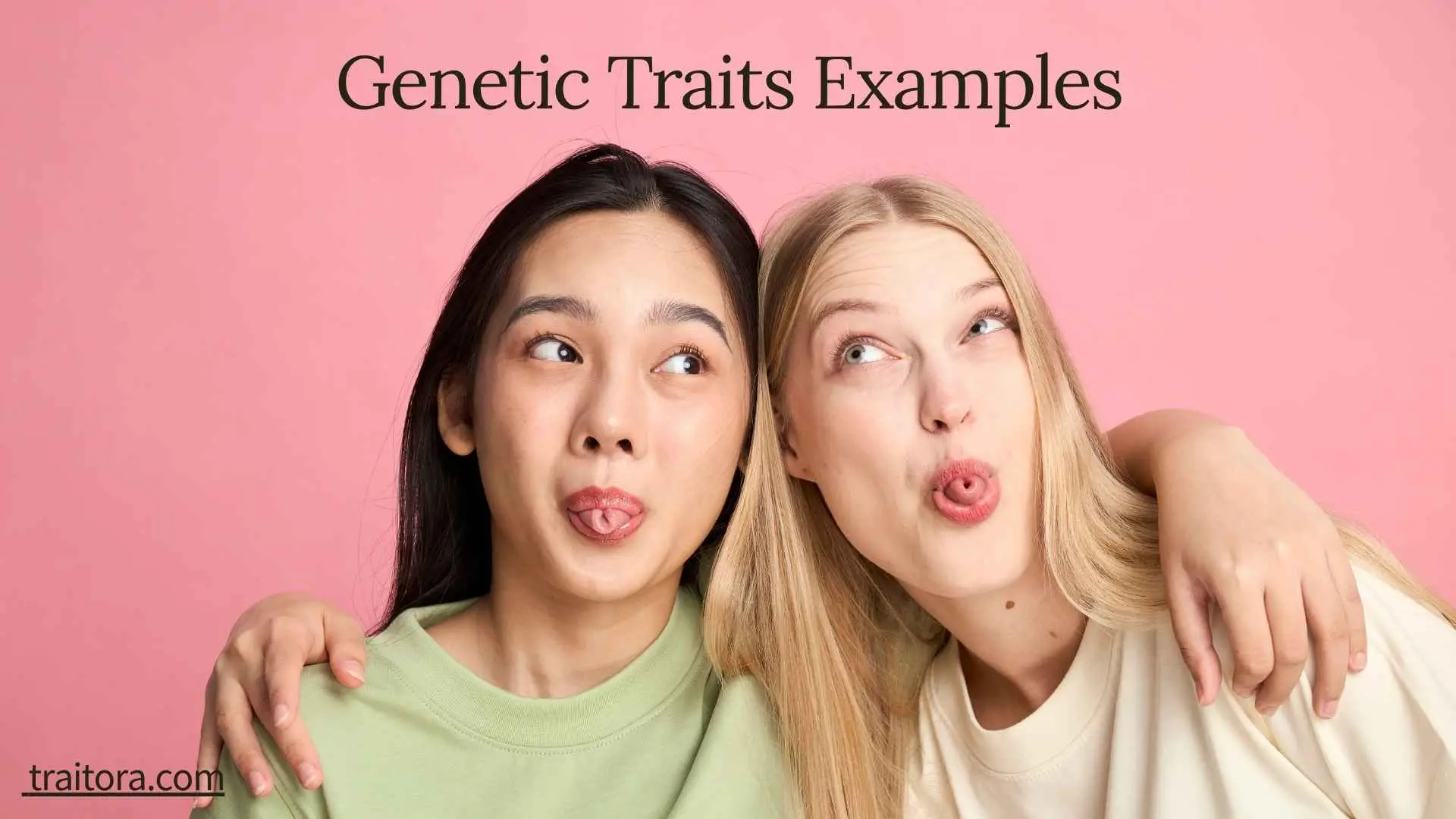
Genetic traits are characteristics influenced by genes passed from parents to offspring. Common genetic traits examples include natural hair color, blood type, eye color, inherited genetic conditions, and certain features in plants and animals. These traits help explain why family members often share similarities while still having unique characteristics.
Understanding genetic traits reveals how heredity works, how DNA influences physical and biological features, and why some characteristics appear in one generation but not another. This guide explores inherited traits, dominant and recessive inheritance, real-life examples, and the difference between genetic and environmental influences.
Quick Answer: What Are Genetic Traits?
Genetic traits are inherited characteristics influenced by genes or variations in DNA. They can affect physical appearance, biological functions, behavior-related tendencies, and susceptibility to certain conditions.
Examples include:
- Natural hair color
- Blood type
- Certain inherited forms of color blindness
- Freckles influenced by genetic variation
- Lactose tolerance in adulthood
- Cystic fibrosis
- Sickle cell disease
- Flower color in plants
- Coat color in animals
Some genetic traits are controlled mainly by a single gene, while others result from many genes working together and may also be influenced by the environment.
Genetic Traits Overview Table
| Genetic trait | Example | Inheritance or influence |
| Eye color | Brown, blue, green | Multiple genes |
| Hair color | Black, brown, blonde | Multiple genes |
| Blood type | A, B, AB, O | ABO gene alleles |
| Hair texture | Curly, wavy, straight | Multiple genes |
| Freckles | Freckled skin | Genetic and environmental influences |
| Color vision | Red-green color blindness | Often X-linked |
| Lactose tolerance | Digestion of milk sugar in adulthood | Genetic variation |
| Cystic fibrosis | Inherited condition affecting mucus | Autosomal recessive |
| Sickle cell disease | Inherited blood disorder | Autosomal recessive |
| Plant height | Tall or short pea plants | Can follow single-gene patterns |
| Flower color | Purple or white flowers | Depends on species and genes |
| Animal coat color | Black, brown, spotted | Species-specific genetic patterns |
What Are Genetic Traits?
A genetic trait is a characteristic that develops partly or entirely because of information encoded in an organism’s DNA.
DNA contains genes, which provide instructions for making proteins and regulating biological processes. Different versions of a gene are called alleles. The combination of alleles an individual inherits can influence how a trait develops.
For example, a child may inherit genetic variants from both parents that contribute to their natural hair color. However, the final appearance of that hair may also change with age, hormones, or environmental exposure.
How Genetic Traits Are Passed Down
Genetic inheritance generally follows these steps:
- Parents carry genetic information in their DNA.
- Egg and sperm cells receive one copy of each chromosome pair.
- During fertilization, the child receives genetic material from both parents.
- The inherited gene combinations influence the child’s characteristics.
- Some traits appear clearly, while others depend on several genes or environmental conditions.
Humans typically inherit 23 chromosomes from each biological parent, forming 23 pairs in most cells.
This explains why children often resemble their parents but are not exact copies of either one.
50+ Examples of Genetic Traits in Humans
Human genetic traits include visible features, biological characteristics, and inherited differences in how the body functions. Some are strongly influenced by genes, while others develop through a combination of genetics and environmental factors.
MedlinePlus+1
1. Physical Appearance Traits
These genetic traits influence how a person looks.
| Trait | Example | Genetic explanation |
| Eye color | Brown, blue, green | Multiple genes affect iris pigmentation |
| Natural hair color | Black, brown, blonde, red | Genes influence melanin production |
| Hair texture | Curly, wavy, straight | Several genes affect hair structure |
| Skin pigmentation | Different natural skin tones | Multiple genes influence melanin |
| Freckles | Small pigmented spots | Genetic factors influence susceptibility |
| Facial dimples | Indentations in cheeks | Genetic contribution varies |
| Earlobe shape | Attached or free earlobes | Involves more complex inheritance than simple textbook models |
| Natural hairline | Different hairline patterns | Genetic influences contribute |
| Height | Shorter or taller stature | Many genes interact with nutrition and health |
| Fingerprint patterns | Loops, whorls, arches | Genetics and prenatal development both contribute |
| Hair thickness | Fine or coarse strands | Multiple genetic factors |
| Baldness tendency | Pattern hair loss | Genetic and hormonal influences |
| Tooth characteristics | Tooth size and spacing | Genes interact with development and environment |
| Nose shape | Different nose structures | Multiple genes contribute |
| Cleft chin | Chin shape variation | Genetic influence, but not a simple dominant trait in all families |
Important: Many physical features once taught as simple dominant or recessive traits are actually influenced by several genes. Eye color, hair texture, and skin pigmentation are examples of complex inheritance.
MedlinePlus+1
2. Blood and Biological Traits
Some inherited traits affect how the body works rather than how it looks.
| Genetic trait | Example | Why it matters |
| ABO blood group | A, B, AB, or O | Important for blood transfusions |
| Rh blood type | Rh-positive or Rh-negative | Relevant to transfusion and pregnancy care |
| Lactose tolerance | Ability to digest lactose in adulthood | Influences milk digestion |
| Red-green color vision | Difficulty distinguishing certain colors | Can affect daily activities |
| Bitter taste perception | Differences in tasting bitter compounds | Influences taste experience |
| Earwax type | Wet or dry earwax | Influenced strongly by the ABCC11 gene |
| Hemoglobin variation | Different hemoglobin forms | Can affect oxygen transport |
| G6PD enzyme activity | Reduced enzyme activity | May affect response to certain medicines or foods |
| Blood clotting tendency | Certain inherited clotting variants | Can influence health risks |
| Drug metabolism | Differences in processing some medicines | Can affect medication response |
Blood type is a particularly clear example of inheritance. The ABO system involves three common alleles: A, B, and O. A and B are codominant, while O is generally recessive.
For example:
- An A allele and a B allele can produce blood type AB.
- Two O alleles produce blood type O.
- An A allele paired with an O allele generally produces blood type A.
3. Genetic Traits Related to Health
Some genetic traits are harmless differences, while others can increase the likelihood of a medical condition or directly cause an inherited disorder.
| Genetic example | Description |
| Sickle cell disease | Inherited condition affecting hemoglobin and red blood cells |
| Cystic fibrosis | Condition affecting mucus and several organs |
| Hemophilia A | Inherited bleeding disorder involving clotting factor VIII |
| Huntington’s disease | Inherited neurological condition |
| Phenylketonuria (PKU) | Inherited condition affecting phenylalanine metabolism |
| Marfan syndrome | Connective tissue condition |
| Familial hypercholesterolemia | Inherited tendency toward high LDL cholesterol |
| Duchenne muscular dystrophy | Inherited muscle-wasting condition |
| Red-green color blindness | Often associated with variants on the X chromosome |
| Alpha-1 antitrypsin deficiency | Inherited condition that can affect the lungs and liver |
These examples show that genetic traits are not limited to appearance. They can influence proteins, enzymes, body systems, and health.
MedlinePlus+1
A genetic variant does not always mean a person will develop a disease. The outcome depends on the specific gene, inheritance pattern, other genetic factors, and sometimes environmental influences.
Genetic Traits Examples in Plants
Plants provide useful examples of inheritance because some traits can be observed clearly across generations.
Mendel’s experiments — Science Learning Hub
Monohybrid Cross Experiment Outline | The Inheritance of Variation – passel
9 3 3 1 Mendel – JasminropRamirez
6
| Plant trait | Example | Inheritance concept |
| Flower color | Purple or white pea flowers | Can follow single-gene inheritance |
| Plant height | Tall or dwarf pea plants | Classic Mendelian example |
| Seed color | Yellow or green peas | Inherited alleles influence color |
| Seed shape | Round or wrinkled peas | Classic Mendelian trait |
| Flower position | Axial or terminal flowers | Genetic variation |
| Fruit color | Red, yellow, or green tomatoes | Multiple genes may contribute |
| Fruit shape | Different squash shapes | Can involve multiple inheritance patterns |
| Leaf color | Green or variegated leaves | Genetic and cellular factors |
| Plant disease resistance | Resistance to certain pathogens | Often influenced by specific genes |
| Flower pigment | Different pigment patterns | Genes regulate pigment production |
Classic Example: Tall and Short Pea Plants
In a simplified Mendelian example, a tall pea plant allele (T) is dominant over a dwarf allele (t).
| Genetic combination | Expected plant trait |
| TT | Tall |
| Tt | Tall |
| tt | Dwarf |
If two heterozygous tall plants (Tt × Tt) are crossed, the expected genetic combinations are:
- 25% TT
- 50% Tt
- 25% tt
This gives an expected phenotype ratio of three tall plants to one dwarf plant, assuming complete dominance and no other influencing factors.
This is a useful teaching example, but many real plant traits are more complex.
Genetic Traits Examples in Animals
Animals inherit traits that affect appearance, behavior, body structure, and survival.
Чи бувають золотисті ретривери чорними: відповідь вас здивує – Pets
10 Types of Tabby Cat Colors & Patterns (With Pictures) – Catster
7
| Animal trait | Example | Genetic influence |
| Fur color | Black, brown, white | Genes control pigment production |
| Coat pattern | Spots, stripes, patches | Species-specific genetic mechanisms |
| Feather color | Different bird plumage | Genes affect pigment and feather structure |
| Eye color | Different shades in dogs or cats | Genetic variation |
| Horn presence | Horned or hornless cattle | Inherited variants |
| Fur length | Short-haired or long-haired cats | Genetic variants affect hair growth |
| Tail length | Different tail forms in some breeds | Inherited developmental traits |
| Body size | Larger or smaller breeds | Multiple genes and environment |
| Beak shape | Different bird species | Genes and evolutionary adaptation |
| Ear shape | Different dog breed ear forms | Genes influence cartilage and development |
Animal traits can be shaped by natural selection, selective breeding, and environmental conditions. A trait that is useful in one environment may be less useful in another.
Dominant vs. Recessive Genetic Traits
Dominant and recessive describe how alleles influence a trait in a particular inheritance pattern. They do not mean that one trait is stronger, better, or more common than another.
Research+1
| Feature | Dominant allele | Recessive allele |
| Copies typically needed | One | Two |
| Heterozygous individual | Trait associated with dominant allele is expressed | Recessive trait usually not expressed |
| Example | Huntington’s disease variant | Cystic fibrosis variants |
| Can be passed silently? | Some variants may have reduced or age-dependent expression | Often carried without symptoms when only one copy is present |
| Does it mean common? | No | No |
Example of Recessive Inheritance
Cystic fibrosis is an autosomal recessive condition. A person typically needs disease-causing variants in both copies of the CFTR gene to develop the condition.
If both parents are carriers of a relevant variant, each pregnancy has the following probabilities:
| Outcome | Probability |
| Child inherits two variant copies and has the condition | 25% |
| Child inherits one variant copy and is a carrier | 50% |
| Child inherits neither variant copy | 25% |
These probabilities apply independently to each pregnancy. They do not predict the exact outcome for a particular child.
MedlinePlus+1
Types of Genetic Inheritance
Not every inherited trait follows the same pattern. The main inheritance types explain why some characteristics appear in predictable ways while others vary across families.
| Inheritance pattern | Meaning | Example |
| Autosomal dominant | One altered gene copy can be sufficient | Huntington’s disease |
| Autosomal recessive | Usually requires altered copies from both parents | Cystic fibrosis |
| X-linked | Gene is located on the X chromosome | Red-green color blindness |
| Y-linked | Gene is located on the Y chromosome | Certain forms of Y-linked infertility |
| Codominance | Both alleles contribute to the observable result | ABO blood group |
| Incomplete dominance | Heterozygous phenotype is intermediate in certain traits | Some flower colors |
| Mitochondrial inheritance | Variants in mitochondrial DNA are passed through the egg | Some mitochondrial disorders |
| Polygenic inheritance | Many genes contribute to one trait | Height and skin pigmentation |
MedlinePlus+1
What Is Polygenic Inheritance?
Polygenic inheritance occurs when multiple genes contribute to a single characteristic.
Examples include:
- Height
- Skin pigmentation
- Eye color
- Hair texture
- Many aspects of body shape
- Some aspects of athletic performance
Polygenic traits often show a wide range of variation rather than a few distinct categories.
For instance, height is influenced by many genetic variants, but childhood nutrition, health, sleep, and other environmental factors also affect growth.
MedlinePlus+1
What Is Codominance?
Codominance occurs when both alleles contribute to the observable trait.
The ABO blood group system is a well-known example. A person who inherits an A allele from one parent and a B allele from the other can have type AB blood because both are expressed.
What Is Incomplete Dominance?
Incomplete dominance occurs when a heterozygous individual has an intermediate phenotype.
For example, in some flower species, crossing a red-flowered plant with a white-flowered plant may produce pink flowers. This does not mean the alleles blend permanently; the original allele variants can still be passed to later generations.
Genetic Traits vs. Acquired Traits
The main difference is that genetic traits are influenced by inherited DNA, while acquired traits develop through experiences, environmental conditions, or changes during life.
| Genetic traits | Acquired traits |
| Influenced by inherited genetic information | Develop through life experiences or environmental exposure |
| Can be passed from parents to children through DNA | Usually are not passed to children through DNA |
| Examples include blood type and inherited color blindness | Examples include scars, learned languages, and pierced ears |
| May be influenced by environmental factors too | May occur regardless of inherited genetic differences |
Examples of Genetic and Acquired Characteristics
- Natural hair color: Primarily influenced by genes.
- Hair dyed blonde: An acquired appearance change.
- Blood type: Inherited through genetic variants.
- A scar: Develops after an injury.
- Muscle strength: Influenced by genetics, exercise, nutrition, and health.
- A learned skill: Develops through practice and experience.
- Sun tanning: An environmental response influenced by skin biology.
- Language spoken: Learned through social and cultural exposure.
Some traits do not fit neatly into either category. Height, for example, is genetic but also depends on nutrition and health during development.
Genetic Traits vs. Personality Traits
Genetic traits and personality traits are related in some ways, but they are not the same.
| Genetic traits | Personality traits |
| Characteristics influenced by DNA | Patterns of thinking, feeling, and behaving |
| Examples include blood type and natural pigmentation | Examples include sociability and conscientiousness |
| Studied through genetics and biology | Studied through psychology and behavioral science |
| Some are directly inherited | Personality reflects both genetic and environmental influences |
Personality traits such as sociability, emotional sensitivity, and temperament may have genetic influences. However, no single gene determines whether someone is kind, confident, honest, or outgoing.
Personality develops through complex interactions among inherited tendencies, family life, culture, experiences, and personal choices.
How Do Genes and the Environment Work Together?
Genes provide biological instructions, but environmental conditions can influence how traits develop and appear.
This relationship is often described as gene-environment interaction.
Examples include:
| Trait | Genetic influence | Environmental influence |
| Height | Many genes affect growth | Nutrition and childhood health |
| Skin pigmentation | Genes influence melanin production | Sun exposure affects tanning |
| Body weight | Genes can influence appetite and metabolism | Diet, activity, sleep, and surroundings |
| Athletic performance | Genes influence muscle and body characteristics | Training, coaching, and nutrition |
| Intelligence-related abilities | Genetic differences contribute to variation | Education, health, and experiences |
| Longevity | Many genes may affect disease risk | Lifestyle, healthcare, and environment |
A person may inherit genetic potential for a particular characteristic, but the final outcome can depend on several factors.
Key insight: Inherited does not mean fixed. Many genetic influences affect probabilities or tendencies rather than guaranteeing a specific outcome.
MedlinePlus+1
15 Real-Life Examples of Genetic Traits
These scenarios show how inherited characteristics can appear in everyday life.
- Family resemblance: A child has a similar natural hair color to one parent because they share genetic variants affecting pigmentation.
- Blood donation: A person’s inherited ABO and Rh blood types help determine which blood products are compatible.
- Siblings with different eye colors: Siblings inherit different combinations of parental genetic variants, creating variation in appearance.
- Inherited lactose tolerance: A person may continue digesting lactose efficiently into adulthood because of inherited regulatory variants.
- Color vision differences: A person inherits an X-linked variant that affects red-green color perception.
- Freckles after summer: Genetic susceptibility combines with sunlight exposure to influence visible freckles.
- A family height pattern: Several relatives are tall partly because they share many height-associated variants.
- Carrier screening: Two prospective parents learn they carry variants associated with the same recessive condition.
- Plant breeding: A gardener selects plants with inherited disease resistance to develop a more resilient crop.
- Dog coat patterns: Puppies inherit combinations of coat-color variants from their parents.
- Blood type inheritance: A child with type AB blood has inherited an A allele and a B allele.
- Medication response: Genetic differences in drug-metabolizing enzymes may affect how a person processes certain medicines.
- Inherited high cholesterol risk: A family history of familial hypercholesterolemia prompts appropriate medical testing.
- Fingerprint variation: Identical twins have highly similar DNA but do not have identical fingerprints because fingerprints also form through prenatal developmental influences.
- Inherited plant height: A plant breeder crosses varieties to select offspring with desired height characteristics.
These examples illustrate that genetics is relevant to family resemblance, healthcare, agriculture, animal breeding, and biological research.
Common Misconceptions About Genetic Traits
Myth 1: All genetic traits are inherited from one parent
Fact: Most people inherit genetic material from both biological parents. A trait may resemble one parent’s characteristics more closely because of allele combinations and how genes are expressed.
Myth 2: Dominant traits are always more common
Fact: Dominance describes how alleles interact, not how frequently an allele occurs in a population. A dominant allele can be rare.
Myth 3: Every trait follows dominant or recessive inheritance
Fact: Many characteristics involve multiple genes, environmental influences, or more complex inheritance patterns.
Myth 4: Children inherit exactly half of every visible trait from each parent
Fact: Children inherit roughly half their nuclear DNA from each biological parent, but individual traits do not necessarily appear as a simple 50/50 blend.
Myth 5: Genetic traits cannot change
Fact: DNA sequence is generally stable in most cells, but gene expression and observable characteristics can change with age, hormones, health, and environment.
Myth 6: A genetic condition must appear in every generation
Fact: Recessive conditions can appear in children whose parents are unaffected carriers. New genetic variants can also arise without a prior family history.
Myth 7: A family history guarantees that someone will develop a condition
Fact: Family history may indicate increased risk, but the actual outcome depends on the condition’s inheritance pattern and other factors.
Myth 8: Eye color is controlled by one dominant gene
Fact: Eye color involves multiple genes that influence pigmentation and how light interacts with the iris. Simple dominant-recessive charts are incomplete explanations.
MedlinePlus+1
How to Identify Whether a Trait Is Genetic
Use this simple guide to understand a characteristic.
Step 1: Is the trait present from birth or does it develop later?
- Present early: It may have a genetic influence, but prenatal development also matters.
- Develops later: It may still be genetic, acquired, or a combination.
Step 2: Does the trait appear in biological relatives?
- Repeated family patterns can suggest inheritance.
- No family history does not rule out a genetic cause.
Step 3: Is the trait known to involve genes?
- Blood type and many inherited conditions have well-established genetic mechanisms.
- Complex traits such as personality and athletic performance involve many influences.
Step 4: Is there reliable evidence?
– Consult reputable genetics resources or a qualified healthcare professional for medical concerns.
Family resemblance alone cannot prove that a characteristic is genetic. Relatives also share environments, habits, and cultural experiences.
Why Genetic Traits Matter
Genetic traits help explain important biological and practical questions.
In Healthcare
Genetic information can help identify inherited conditions, estimate certain health risks, guide screening, and sometimes inform treatment choices.
Genetic counseling may be useful for people with a family history of inherited disorders or those considering carrier screening.
In Family Planning
Understanding inheritance patterns can help prospective parents learn whether they may pass on particular genetic variants.
For recessive conditions, both biological parents generally need to carry relevant variants for a child to be affected.
In Agriculture
Plant and animal breeders use inherited traits to select characteristics such as disease resistance, crop quality, coat color, and growth patterns.
In Scientific Research
Researchers study genetic traits to understand human variation, biological development, evolution, and the causes of inherited conditions.
In Everyday Life
Learning about genetics helps people understand family similarities without assuming that every physical, behavioral, or health characteristic is determined entirely by DNA.
Related Genetic Concepts
| Related concept | Meaning |
| Heredity | Passing genetic information from parents to offspring |
| Gene | A DNA sequence with a functional role |
| Allele | A version of a gene |
| Genotype | An individual’s genetic makeup or allele combination |
| Phenotype | Observable characteristics resulting from genes and other influences |
| DNA | Molecule that carries genetic information |
| Chromosome | Structure containing DNA and associated proteins |
| Mutation | A change in DNA sequence |
| Genetic variation | Differences in DNA among individuals |
| Carrier | Person with a genetic variant who may pass it to offspring |
| Genetic testing | Analysis of DNA or chromosomes for specific information |
| Genetic counseling | Guidance about genetic risks and testing |
Understanding these terms makes it easier to interpret inheritance charts, family histories, and genetic test results.
Frequently Asked Questions About Genetic Traits
What are 10 examples of genetic traits?
Ten common examples are eye color, natural hair color, hair texture, blood type, skin pigmentation, height, fingerprints, freckles, lactose tolerance, and red-green color vision differences. These traits vary in how strongly they are influenced by genes and the environment.
What are the most common inherited traits?
Common inherited characteristics include natural hair color, eye color, blood type, skin pigmentation, and aspects of height and facial appearance. Most visible traits involve multiple genes rather than a single inheritance pattern.
What are examples of dominant genetic traits?
Examples of dominant inheritance include certain forms of Huntington’s disease, Marfan syndrome, and some inherited plant characteristics. A dominant allele can influence a trait when only one copy is present, although the expression of specific traits can vary.
What are examples of recessive genetic traits?
Examples include cystic fibrosis, sickle cell disease, and phenylketonuria (PKU). These conditions generally require disease-causing variants in both copies of the relevant gene.
Are freckles a genetic trait?
Freckles have a genetic component, but their appearance is also influenced by sunlight exposure. Some people inherit greater susceptibility to freckles, which become more noticeable after UV exposure.
Is height a genetic trait?
Yes. Height is strongly influenced by many genes, but it also depends on nutrition, childhood health, hormones, and other environmental factors.
Is eye color inherited from parents?
Yes. Eye color is influenced by genetic variants inherited from both biological parents. Several genes affect the amount and distribution of pigment in the iris.
Can two parents with brown eyes have a blue-eyed child?
Yes. Eye color involves multiple genes, so two brown-eyed parents can sometimes have a blue-eyed child if they carry and pass on genetic variants associated with lighter eye color.
Are behavioral traits genetic?
Some behavioral tendencies, including aspects of temperament, may have genetic influences. However, behavior is shaped by many factors, including upbringing, culture, education, experiences, and personal decisions.
What is the difference between genetic and inherited traits?
A genetic trait is influenced by genes. An inherited trait is passed from parents to offspring through genetic material. Many genetic traits are inherited, but some genetic changes arise for the first time in an individual.
Can genetic traits skip a generation?
Yes. Recessive traits can appear in a child even when neither parent shows the trait. Both parents may carry a relevant allele and pass it to their child.
How can I learn about my genetic traits?
You can learn about some traits through family history, blood typing, or genetic testing. For medical questions, discuss testing and interpretation with a qualified healthcare professional or genetic counselor.
Key Takeaways
- Genetic traits are characteristics influenced by inherited DNA.
- Examples include blood type, natural hair color, eye color, and inherited conditions.
- Genes can influence physical appearance, biological functions, and health risks.
- Dominant and recessive inheritance explain some traits, but many involve multiple genes.
- Genetic traits can be influenced by environmental conditions.
- Plants and animals also inherit traits such as flower color, coat patterns, and disease resistance.
- Family resemblance does not always prove a trait is genetic.
- Genetic inheritance helps explain similarities and differences among relatives.
Conclusion
Genetic traits examples demonstrate how DNA influences the characteristics of humans, plants, and animals. From blood type and natural hair color to inherited health conditions and plant characteristics, genetics plays an important role in biological variation.
Some traits follow simple dominant or recessive patterns, while others involve multiple genes and environmental influences. Understanding these differences helps explain why family members share certain characteristics yet remain unique.
Genetics is not only about appearance. It also provides valuable insight into health, heredity, agriculture, scientific research, and the biological connections between generations.

I am Ethan Waverly, a writer fascinated by personality, character, and the traits that make every person unique. I enjoy exploring human behaviour, strengths, weaknesses, and everyday characteristics. Through my writing, I aim to help readers better understand themselves and others using clear, engaging, and practical information.
Books:
- The Hidden Traits That Shape Who You Are
- Understanding Personality: A Guide to Human Traits