Why do children often look like their parents? Why might two siblings have different eye colors, hair textures, heights, or other characteristics even though they share the same biological parents? The answer lies in the inheritance of traits, a biological process through which parents pass genetic information to their offspring.
The inheritance of traits is the transmission of characteristics from parents to children through genes. These characteristics may include physical features, blood types, certain inherited conditions, and biological tendencies. Genes are made of DNA and contain instructions that help determine how an organism develops and functions.
This process is a central part of genetics, the scientific study of heredity and variation. It explains similarities between family members, differences among siblings, and the diversity found within plants, animals, and humans.
Understanding how traits are inherited also helps explain dominant and recessive alleles, genetic variation, mutations, inherited disorders, and the role of environmental influences. In this guide, you will learn how genetic inheritance works, explore Mendel’s laws, understand different inheritance patterns, and discover practical examples of inherited characteristics in everyday life.
Inheritance of Traits: Quick Answer
Inheritance of traits is the process by which parents pass genetic information to their offspring through DNA and genes. Offspring receive genetic material from their biological parents, and the combination of inherited gene versions, called alleles, influences their characteristics.
For example, a child may inherit genes associated with brown eyes from one parent and a different eye-color allele from the other. The resulting eye color depends on the interaction of multiple genetic factors.
Key facts:
- Genes carry hereditary information.
- DNA contains the genetic instructions of living organisms.
- Alleles are different versions of the same gene.
- Offspring inherit nuclear DNA from both biological parents.
- Some traits follow dominant and recessive inheritance patterns.
- Many characteristics are influenced by several genes.
- Environmental factors can also affect how traits develop.
Overview of Inherited Traits
| Category | Explanation | Example |
| Inherited traits | Characteristics influenced by genetic information passed from parents | Natural hair color |
| Acquired traits | Characteristics developed through experience or environmental exposure | A learned language |
| Physical traits | Observable biological characteristics | Eye color |
| Physiological traits | Characteristics related to body functions | Certain metabolic abilities |
| Behavioral tendencies | Behaviors that may have genetic and environmental influences | Temperament |
| Dominant traits | Traits associated with a dominant allele in a particular inheritance pattern | Certain forms of attached or unattached earlobes are sometimes used as simplified teaching examples, although real inheritance can be more complex |
| Recessive traits | Traits that generally require two copies of a recessive allele in a simple recessive model | Certain inherited conditions |
| Polygenic traits | Characteristics influenced by multiple genes | Height |
What Is the Inheritance of Traits?
The inheritance of traits is the biological process through which genetic information passes from one generation to the next. It allows offspring to receive characteristics from their biological parents while also creating genetic differences between individuals.
The process begins with DNA, which contains genes. Genes provide instructions for producing functional molecules, including proteins and certain types of RNA. These molecules help regulate growth, development, metabolism, and other biological activities.
In sexually reproducing organisms, offspring generally receive one set of nuclear chromosomes from each biological parent. In humans, this means receiving 23 chromosomes from the egg and 23 from the sperm, producing 46 chromosomes in most body cells.
The inherited genetic combination influences many characteristics, but it does not determine every aspect of an individual’s appearance, health, or behavior.
What Does Heredity Mean in Biology?
Heredity refers to the passing of biological information and characteristics from parents to offspring.
For example:
- A puppy may inherit coat-color genes from its parents.
- A child may inherit a genetic variant associated with blood type.
- A flowering plant may inherit genes that influence flower color.
- A family may share a genetic predisposition to a particular inherited condition.
Heredity explains why members of the same biological family often share certain characteristics.
What Is the Difference Between Heredity and Inheritance?
Although these terms are closely related, they have slightly different uses.
| Heredity | Inheritance |
| The general biological phenomenon of passing characteristics between generations | The transmission or receipt of specific genetic information |
| Describes the overall process of genetic continuity | Describes how particular genes or alleles are passed down |
| Explains family resemblance | Explains individual inherited characteristics |
| A broad concept in biology | A specific process within heredity |
Both terms are important in genetics because they explain how biological characteristics continue across generations.
How Are Traits Inherited From Parents?
Traits are inherited when genetic material is transferred from biological parents to offspring through reproductive cells.
In humans, the process involves eggs and sperm. Each reproductive cell contains 23 chromosomes, which carry DNA and thousands of genes.
The basic process works as follows:
- Parents carry genetic information: Each biological parent has genes containing different versions of genetic instructions.
- Reproductive cells develop: Eggs and sperm receive one chromosome from each pair through a process called meiosis.
- Fertilization occurs: A sperm cell joins an egg cell, combining genetic material from both parents.
- A new genetic combination forms: The fertilized egg receives 46 chromosomes in the typical human case.
- Development begins: Cells divide, genes become active in different tissues, and inherited information contributes to the developing organism’s characteristics.
About Genetics and Hearing Loss | Parent Guides to Hearing Loss | CDC
Why Do Children Resemble Their Parents?
Children resemble their biological parents because they inherit genetic information from both.
For example, a child may share a parent’s natural hair color, another parent’s facial features, or a combination of characteristics found in both sides of the family.
However, children are not exact genetic copies of either parent. The combination of alleles they receive is generally unique, except in cases such as identical twins, who begin with nearly identical nuclear DNA.
Why Are Siblings Different From Each Other?
Biological siblings usually share approximately half of their segregating nuclear DNA variants, on average, but they do not inherit exactly the same combination.
This happens because:
- Chromosomes exchange DNA segments during meiosis.
- Different combinations of chromosomes enter reproductive cells.
- Fertilization randomly combines one egg and one sperm.
- New genetic mutations can occasionally arise.
As a result, siblings can have different eye colors, heights, hair characteristics, and other inherited features.
Even siblings with the same parents can look noticeably different.
The Role of Genes, DNA, and Chromosomes in Inheritance
Genes, DNA, and chromosomes work together to transfer hereditary information from parents to offspring. Each has a different role in determining how inherited characteristics develop.
2.1: Genetics and Environment – Social Sci LibreTexts
1. DNA: The Carrier of Genetic Information
DNA (deoxyribonucleic acid) is the molecule that stores genetic instructions in living organisms.
It contains four chemical bases:
- Adenine (A)
- Thymine (T)
- Cytosine (C)
- Guanine (G)
These bases form specific sequences that make up genetic information.
DNA is important because it contains the instructions cells use to develop, function, and reproduce. Changes in DNA sequences can sometimes influence inherited characteristics.
2. Genes: The Basic Units of Heredity
A gene is a section of DNA that contributes to a particular biological function or characteristic.
Genes influence many features, including:
- Hair pigmentation
- Eye pigmentation
- Blood group
- Certain aspects of metabolism
- Some inherited health conditions
- Differences in how the body processes substances
Most genes have multiple versions called alleles. These variations help explain why individuals can inherit different characteristics from the same parents.
3. Chromosomes: Structures That Carry Genes
Chromosomes are organized structures made of DNA and proteins. They contain many genes arranged along their length.
Humans typically have 46 chromosomes arranged in 23 pairs:
- 22 pairs of autosomes
- One pair of sex chromosomes
One chromosome in each pair generally comes from the biological mother, and the other comes from the biological father.
Chromosomes help organize and distribute genetic information during cell division and reproduction.
4. Alleles: Different Versions of Genes
Alleles are alternative forms of the same gene.
For example, a gene involved in pigmentation may have different alleles that contribute to variations in appearance.
An individual usually inherits two copies of each autosomal gene, one from each biological parent. The combination of those alleles influences how a particular characteristic develops.
5. Proteins: How Genetic Instructions Influence Traits
Genes influence characteristics partly by providing instructions for making proteins.
Proteins perform many important functions, including:
- Building and repairing tissues
- Supporting immune responses
- Helping chemical reactions occur
- Transporting substances throughout the body
- Regulating cellular activities
The relationship between genes and proteins helps explain how inherited genetic information produces observable characteristics.
Types of Inheritance of Traits
There are several patterns through which genetic characteristics pass from parents to offspring. Some involve a single gene, while others involve multiple genes, chromosomes, or interactions with the environment.
Understanding these patterns helps explain why certain traits appear in every generation while others may skip generations.
1. Dominant Inheritance
Dominant inheritance occurs when one copy of a particular allele is sufficient to influence a characteristic.
In a simple dominant-recessive model, a dominant allele is represented by a capital letter.
For example:
- AA = two dominant alleles
- Aa = one dominant and one recessive allele
- aa = two recessive alleles
If A represents a dominant allele, individuals with AA or Aa show the dominant phenotype under the simplified model.
Example: In certain inherited conditions, such as Huntington’s disease, one disease-associated variant in the relevant gene can cause the condition.
It is important to understand that dominance describes how alleles influence a phenotype. It does not mean that an allele is stronger, healthier, or more common.
2. Recessive Inheritance
Recessive inheritance occurs when a characteristic associated with a recessive allele appears when the required recessive genetic copies are present.
In a basic autosomal recessive model:
- AA = unaffected, without the recessive variant
- Aa = carrier
- aa = affected by the recessive condition
A carrier generally has one typical allele and one disease-associated recessive variant. Carriers usually do not develop the condition, although this depends on the specific genetic variant.
Example: Cystic fibrosis and sickle cell disease are examples of conditions commonly inherited through autosomal recessive patterns.
3. Codominant Inheritance
Codominance occurs when two different alleles are both expressed in the phenotype.
Neither allele completely hides the effect of the other.
Example: ABO blood groups
The ABO blood group system provides a clear example:
- A allele
- B allele
- O allele
A and B are codominant with each other, while O is generally recessive to both.
| Genotype | Blood type |
| AA | A |
| AO | A |
| BB | B |
| BO | B |
| AB | AB |
| OO | O |
A person with the AB genotype expresses both A and B blood group antigens.
4. Incomplete Dominance
Incomplete dominance occurs when the heterozygous phenotype is intermediate between the two homozygous phenotypes.
Example: Flower color
Imagine a plant with:
- RR = red flowers
- WW = white flowers
- RW = pink flowers
When the red and white alleles are combined, the flowers appear pink in this simplified example.
This pattern differs from complete dominance because neither allele completely determines the visible result.
5. Polygenic Inheritance
Polygenic inheritance occurs when multiple genes contribute to one characteristic.
Unlike simple Mendelian traits, polygenic characteristics often show a wide range of variation.
Examples include:
- Human height
- Skin pigmentation
- Eye pigmentation
- Many aspects of body composition
For example, a person’s height is influenced by many genetic variants. Nutrition, childhood health, hormones, and other environmental factors also affect final height.
This is why children may be taller or shorter than either parent.
The National Human Genome Research Institute explains that polygenic characteristics involve multiple genes and frequently interact with environmental influences.
Genome.gov+1
6. Sex-Linked Inheritance
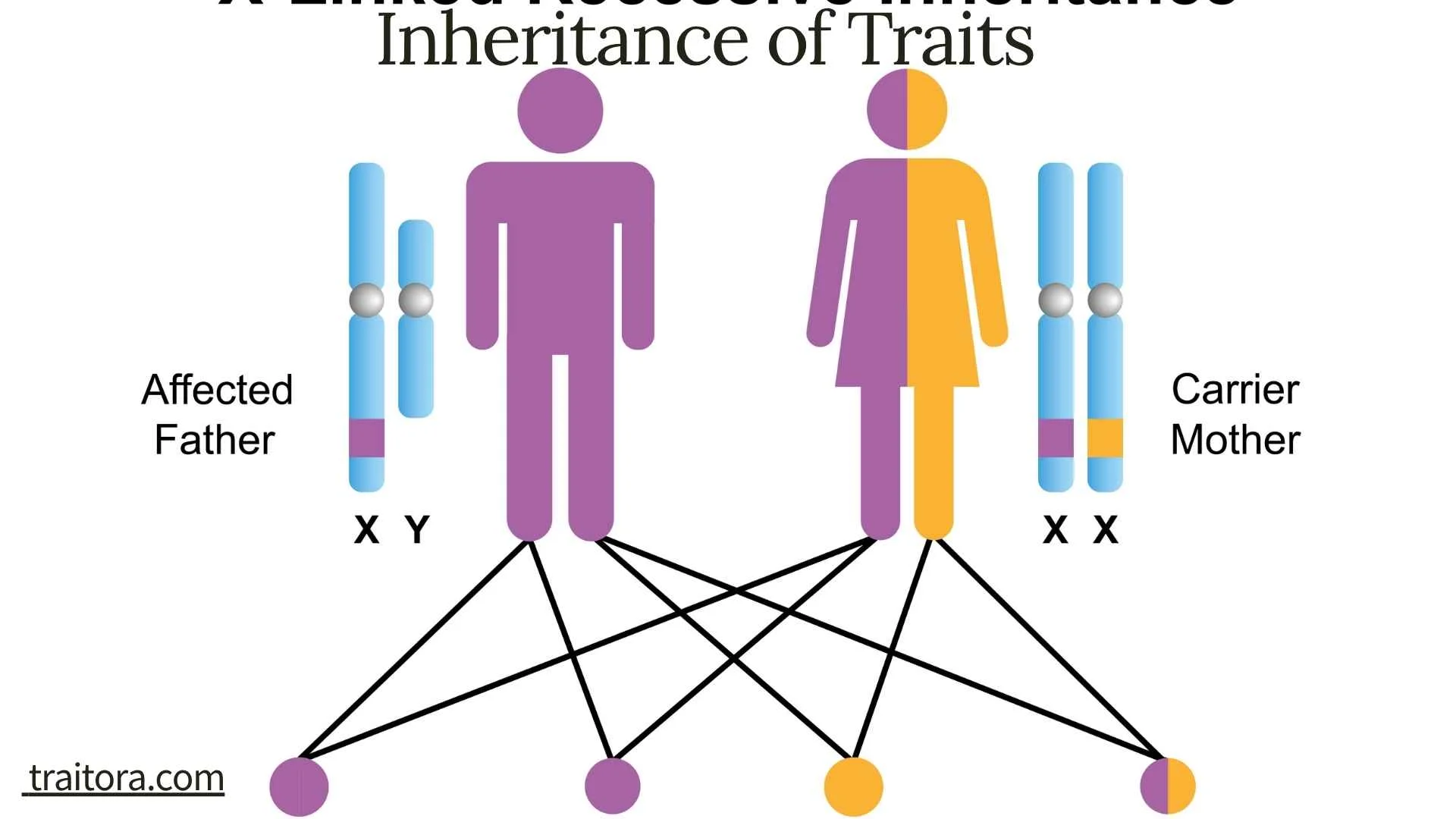
Sex-linked inheritance involves genes located on sex chromosomes, particularly the X chromosome.
Humans typically have:
- XX sex chromosomes in females
- XY sex chromosomes in males
Some inherited conditions are more common in people with one X chromosome because a disease-associated variant on that chromosome may not have a second copy to compensate for its effects.
Examples include:
- Red-green color vision deficiency
- Hemophilia A
- Duchenne muscular dystrophy
For X-linked inheritance, fathers pass their X chromosome to daughters and their Y chromosome to sons. Therefore, fathers do not pass X-linked variants directly to their sons.
7. Mitochondrial Inheritance
Mitochondrial inheritance involves genetic information stored in mitochondrial DNA rather than nuclear DNA.
Mitochondria are structures inside cells that help produce energy.
In humans, mitochondrial DNA is generally inherited from the biological mother because the egg provides the mitochondria that develop in the embryo.
Both sons and daughters can inherit mitochondrial DNA variants, but only daughters generally pass those variants to their children.
An example of a condition associated with mitochondrial DNA changes is Leber hereditary optic neuropathy.
8. Multifactorial Inheritance
Multifactorial inheritance occurs when multiple genetic and environmental factors contribute to a characteristic or health condition.
Examples include:
- Blood pressure
- Heart disease risk
- Type 2 diabetes risk
- Some forms of cancer susceptibility
- Body weight
For instance, a person may inherit genetic variants associated with increased blood pressure risk. However, diet, physical activity, age, stress, and other factors also influence the outcome.
Multifactorial inheritance is particularly important because it shows why genetic information alone cannot always predict a person’s future characteristics or health.
MedlinePlus+1
Mendel’s Laws of Inheritance
Gregor Mendel is widely recognized as one of the founders of modern genetics because his experiments helped establish important principles of heredity.
He studied pea plants and observed how characteristics passed from one generation to another.
Mendel’s experiments — Science Learning Hub
His experiments provided the foundation for understanding dominant and recessive inheritance.
Who Was Gregor Mendel?
Gregor Mendel was a scientist and Augustinian monk who conducted experiments with garden pea plants during the 19th century.
He selected pea plants because they had easily observed characteristics, including:
- Flower color
- Seed shape
- Seed color
- Plant height
- Pod shape
- Pod color
By controlling pollination and studying successive generations, Mendel identified patterns that helped explain how inherited characteristics are transmitted.
His work was published in 1866 and later became central to the development of genetics.
1. Law of Dominance
The law of dominance describes how one allele may determine the observable phenotype when two different alleles are present.
For example, if a plant inherits one dominant purple-flower allele and one recessive white-flower allele, it may produce purple flowers under complete dominance.
However, this principle does not apply to every gene because some characteristics involve codominance, incomplete dominance, or more complex genetic interactions.
2. Law of Segregation
The law of segregation states that the two alleles of a gene separate during the formation of reproductive cells.
As a result, each egg or sperm typically receives only one allele from a particular pair.
During fertilization, the offspring receives one allele from each biological parent.
For example, a parent with the genotype Aa can produce reproductive cells carrying either A or a.
3. Law of Independent Assortment
The law of independent assortment explains that alleles of different genes can be distributed independently into reproductive cells when the genes are not linked.
This principle helps explain why offspring can inherit different combinations of characteristics.
However, genes located close together on the same chromosome may be inherited together more often because of genetic linkage.
Why Are Mendel’s Laws Important?
Mendel’s principles help scientists understand:
- How inherited characteristics are transmitted.
- Why recessive characteristics may reappear.
- How genetic combinations form.
- Why offspring can show different characteristics.
- How some inherited disorders pass through families.
Modern genetics has expanded Mendel’s original ideas to include DNA, mutations, gene regulation, chromosome behavior, and complex inheritance.
Dominant vs. Recessive Traits: What Is the Difference?
Dominant and recessive inheritance describe how different alleles contribute to an organism’s observable characteristics.
| Feature | Dominant inheritance | Recessive inheritance |
| Number of required alleles in a simple model | One dominant allele | Two recessive alleles |
| Common notation | AA or Aa | aa |
| Can a carrier show the phenotype? | Usually yes for a fully penetrant dominant variant | Usually not in a simple recessive condition |
| Family pattern | May appear in successive generations | May skip generations |
| Example | Huntington’s disease | Cystic fibrosis |
Important distinction: Dominant does not mean more powerful, and recessive does not mean rare. These terms describe relationships between alleles, not their frequency or biological value.
Inherited Traits vs. Acquired Traits
Not every characteristic a person develops comes directly from inherited genes.
Some characteristics are influenced mainly by genetics, while others develop through environmental exposure, learning, and personal experiences.
| Inherited traits | Acquired traits |
| Influenced by genetic information passed from parents | Develop through environmental influences or experiences |
| Can be transmitted genetically to offspring | Usually are not passed directly through DNA |
| May be present from birth or emerge later | Often develop during life |
| Examples include natural eye color and certain inherited conditions | Examples include language skills and learned musical abilities |
Examples of Inherited Traits
- Natural eye color
- Natural hair texture
- Blood group
- Certain genetic conditions
- Some aspects of facial structure
- Genetic predisposition to certain health conditions
Examples of Acquired Traits
- Learning to swim
- Developing a particular accent
- Building muscle through exercise
- Learning a new language
- Developing a skill in painting
- Getting a scar after an injury
Can Acquired Traits Become Inherited?
Most acquired characteristics are not directly transmitted through DNA to offspring.
For example, if someone develops strong muscles through exercise, their children do not automatically inherit those muscles.
However, researchers study epigenetics, which examines changes in gene activity that do not alter the underlying DNA sequence.
Some epigenetic changes can persist through cell divisions, and certain effects may be transmitted across generations. The extent and importance of transgenerational epigenetic inheritance in humans remain areas of scientific research.
Physical Traits That Can Be Inherited From Parents
Physical traits are observable characteristics influenced by genetic information. Some are strongly influenced by a small number of genes, while others involve many genes and environmental factors.
Akkor a szemszín öröklődése nem is olyan egyszerű? (Közép- és emeltszintű olvasmány)|Blog | Bioszfakt.hu
Here are common examples of physical characteristics that may be inherited.
1. Eye Color
Eye color is influenced by multiple genetic variations that affect pigmentation in the iris.
Brown, blue, green, and hazel eyes result from differences in pigment amount and distribution, along with the way light interacts with the iris.
A child does not necessarily inherit the same eye color as either parent because several genes contribute to this characteristic.
2. Hair Color
Natural hair color is influenced by genes that regulate melanin production and distribution.
Common hair colors include:
- Black
- Brown
- Blonde
- Red
- Various intermediate shades
Hair color may change naturally as a person ages because pigment production can decrease over time.
3. Hair Texture
Hair texture is influenced by genetic factors that affect the shape and structure of hair follicles.
Common hair textures include:
- Straight
- Wavy
- Curly
- Coily
Children may inherit hair characteristics from either parent or show a combination of features from both sides of their family.
4. Skin Pigmentation
Skin color is influenced by multiple genes involved in melanin production, distribution, and regulation.
Melanin helps protect skin cells from ultraviolet radiation.
Children often have pigmentation influenced by both biological parents, although the exact combination can vary considerably.
Sun exposure can also change skin pigmentation during life.
5. Height
Height is a classic example of a polygenic trait.
Many genetic variants contribute to a person’s potential height. Environmental influences, including nutrition, childhood illness, hormones, and general health, also affect growth.
This explains why two children from the same family may have different adult heights.
6. Facial Features
Several facial characteristics have genetic influences, including:
- Nose shape
- Chin structure
- Jaw shape
- Cheekbone structure
- Lip shape
- Facial proportions
These features are complex and usually involve multiple genes rather than one simple dominant or recessive gene.
7. Earlobe Shape
Earlobe attachment is often used in introductory biology lessons to explain inherited characteristics.
However, the old explanation that attached earlobes are simply recessive and unattached earlobes are simply dominant is an oversimplification. Human earlobe shape involves more complex genetic influences.
8. Dimples
Dimples are small indentations that may appear in the cheeks when a person smiles.
They can run in families, suggesting genetic influences. However, their inheritance is not explained reliably by a single dominant gene.
9. Freckles
Freckles are small areas of increased pigmentation that commonly develop after sun exposure.
Genetic variations influence the likelihood of developing freckles, while ultraviolet exposure affects how visible they become.
10. Blood Type
Blood type is inherited through alleles passed from biological parents.
The ABO system includes A, B, and O alleles, while the Rh blood group system is determined by additional genetic factors.
A child’s blood group depends on the combination of alleles inherited from both parents.
Behavioral and Psychological Traits Influenced by Genetics
Some psychological characteristics and behavioral tendencies have genetic influences. However, they are not inherited in the same simple way as a blood group or certain single-gene conditions.
Human behavior develops through interactions between genetic differences, brain development, family environment, education, culture, and personal experiences.
Speech Blubs – Speech Learning Made Fun
1. Temperament
Temperament refers to relatively early-emerging differences in emotional responses, activity levels, and reactions to new situations.
Some aspects of temperament have genetic influences.
For example, one child may naturally respond cautiously to unfamiliar situations, while another may approach new experiences with greater ease.
Parenting, relationships, and life experiences also influence how temperament develops.
2. Introversion and Extraversion
Introversion and extraversion describe broad differences in how people tend to engage with social environments.
Genetic factors contribute to individual differences in personality, but social experiences and personal development also matter.
A child may share certain personality tendencies with a parent without having an identical personality.
3. Emotional Reactivity
Emotional reactivity refers to how strongly or quickly someone responds emotionally to different situations.
Genetic differences may contribute to variations in emotional sensitivity, but upbringing, stress, relationships, and coping skills can influence emotional responses.
4. Learning Abilities
Some cognitive abilities have genetic influences.
However, learning is shaped by many factors, including:
- Educational opportunities
- Nutrition
- Sleep
- Practice
- Family support
- Social environment
- Access to learning resources
A child’s academic performance cannot be predicted accurately from a parent’s intelligence or educational achievements alone.
5. Risk-Taking Tendencies
People differ in their willingness to explore unfamiliar situations, seek excitement, or take risks.
These differences may have biological and genetic influences, but experience, social pressure, personal judgment, and environmental conditions also play important roles.
Key insight: Inherited tendencies are not fixed outcomes. A genetic influence does not mean that a person’s personality or behavior is predetermined.
How the Environment Influences Inherited Traits
Genes provide biological instructions, but environmental conditions influence how many characteristics develop.
This relationship is especially important for complex traits such as height, health, body composition, and behavior.
The Nature vs. Nurture Debate Tutorial | Sophia Learning
1. Nutrition
Nutrition influences physical development, especially during childhood and adolescence.
A child may inherit genes associated with tall stature, but inadequate nutrition can limit the ability to reach their genetic growth potential.
2. Climate and Sunlight
Environmental exposure can influence certain physical characteristics.
For example, sunlight stimulates melanin production in the skin, which can lead to tanning.
However, this acquired change does not mean a person’s inherited skin pigmentation genes have been replaced.
3. Physical Activity
Exercise influences muscle development, endurance, strength, and overall physical fitness.
Genetics may influence factors such as muscle composition and athletic potential, but training and physical activity are important in determining performance.
4. Education and Learning
Genetic differences can contribute to learning-related abilities, but education, teaching quality, practice, and access to resources influence academic development.
A supportive learning environment can help children develop their abilities.
5. Health and Lifestyle
Sleep, physical activity, nutrition, tobacco exposure, and other lifestyle factors can influence health outcomes.
Some people inherit genetic variants that increase susceptibility to certain conditions. Their actual health outcomes may depend on a combination of genetic and environmental factors.
Nature vs. Nurture: Understanding Genetic and Environmental Influences
Nature refers to inherited biological influences, while nurture refers to environmental influences and experiences.
Both contribute to human development.
| Nature | Nurture |
| Genetic information inherited from parents | Experiences and environmental conditions |
| Influences biological development | Influences learning and adaptation |
| Contributes to inherited physical characteristics | Can affect physical development and appearance |
| May influence personality tendencies | Shapes behavior and social development |
| Includes inherited genetic variations | Includes family, education, nutrition, and culture |
Which Is More Important: Nature or Nurture?
Neither is universally more important.
The answer depends on the particular characteristic being studied.
For example:
- Blood type is primarily determined by inherited genetic information.
- Language development depends heavily on exposure and learning.
- Adult height reflects both genetic and environmental influences.
- Athletic performance involves inherited biological factors, training, nutrition, and experience.
- Personality develops through interactions between biological tendencies and life experiences.
The best way to understand human development is to consider how nature and nurture work together.
Punnett Squares: How to Predict the Inheritance of Traits
A Punnett square is a simple diagram used to predict possible allele combinations in offspring.
It is especially useful when studying characteristics that follow basic Mendelian inheritance patterns.
Example: A Dominant and Recessive Trait
Suppose two parents have the genotype Aa.
- A represents a dominant allele.
- a represents a recessive allele.
Each parent can pass either A or a to their child.
The Punnett square looks like this:
| A (Parent 2) | a (Parent 2) | |
| A (Parent 1) | AA | Aa |
| a (Parent 1) | Aa | aa |
What Are the Possible Results?
The offspring may inherit one of four allele combinations:
| Genotype | Probability | Meaning |
| AA | 25% | Two dominant alleles |
| Aa | 50% | One dominant and one recessive allele |
| aa | 25% | Two recessive alleles |
Under complete dominance, the expected phenotype ratio is:
- 75% dominant phenotype
- 25% recessive phenotype
Important genetics concept
These percentages represent probabilities for each pregnancy in the simplified model. They do not guarantee that exactly three out of every four children will show the dominant phenotype.
For example, a family with four children could have four children with the dominant phenotype, four with the recessive phenotype, or another combination.
How to Solve a Punnett Square
Follow these steps:
- Identify the genotypes of both parents.
- Write the possible alleles from each parent.
- Place one parent’s alleles across the top.
- Place the other parent’s alleles down the side.
- Combine the alleles in each square.
- Calculate the expected genotype and phenotype probabilities.
When Should You Use a Punnett Square?
Punnett squares are useful for:
- Understanding simple dominant and recessive inheritance.
- Studying Mendelian genetics.
- Learning about carrier probabilities.
- Predicting possible offspring genotypes.
- Understanding inherited conditions caused by single-gene variants.
They are not sufficient to predict complex traits such as height, intelligence, or most aspects of personality.
Examples of Inheritance of Traits in Everyday Life
The inheritance of traits can be observed in humans, animals, plants, and other living organisms.
The following examples demonstrate how genetic information influences characteristics in different situations.
| No. | Example | How inheritance influences the trait |
| 1 | A child has brown eyes like a parent | Inherited pigmentation-related genetic variations contribute to eye color |
| 2 | Two siblings have different hair textures | They receive different combinations of parental alleles |
| 3 | A child has the same blood group as a parent | The child inherits compatible ABO alleles |
| 4 | A family shares naturally curly hair | Genetic variations influence hair follicle structure |
| 5 | A child grows taller than both parents | Multiple genetic and environmental factors influence height |
| 6 | A person inherits a genetic condition | A disease-associated variant passes from a biological parent |
| 7 | A puppy has a coat color seen in its parents | Inherited alleles influence coat pigmentation |
| 8 | A plant produces purple flowers | Inherited genes influence flower pigmentation |
| 9 | A child develops freckles | Genetic susceptibility and sun exposure contribute |
| 10 | A family shares a tendency toward certain metabolic conditions | Multiple genetic and environmental influences may contribute |
| 11 | A kitten has a coat pattern associated with its breed | Several inherited genes influence coat characteristics |
| 12 | A child has facial features resembling a grandparent | Genetic variants can pass through generations |
| 13 | A person has a particular inherited blood group | The combination of parental blood-group alleles determines the result |
| 14 | A family shares a tendency toward a particular temperament | Genetic influences may contribute alongside environmental factors |
| 15 | A seed produces a plant with a particular flower color | The plant inherits genetic information from its parent plants |
Inheritance of Traits in Humans
Human inheritance explains family similarities in physical features, blood groups, and certain biological characteristics.
For example, a child may inherit a genetic variant associated with a particular blood group from one parent and another allele from the other parent.
The combination determines the child’s blood group.
Inheritance of Traits in Animals
Animals inherit characteristics from their parents just as humans do.
Examples include:
- Fur color in cats
- Coat patterns in dogs
- Feather color in birds
- Body size in certain breeds
- Flowering or reproductive characteristics in animal species
Selective breeding uses inherited genetic variation to increase the likelihood of particular characteristics appearing in future generations.
Inheritance of Traits in Plants
Plants pass genetic information to their offspring through seeds or other reproductive structures.
Inherited characteristics may include:
- Flower color
- Seed shape
- Plant height
- Fruit characteristics
- Disease resistance
- Growth patterns
Farmers and plant breeders use knowledge of genetic inheritance to develop crops with useful characteristics.
How Traits Are Passed From Grandparents to Grandchildren
Traits can pass through several generations because genetic information is transmitted from parents to offspring.
A child may inherit a genetic variant from a parent who inherited it from one of their own parents.
This explains why some family characteristics appear to skip a generation.
Why Do Some Traits Skip Generations?
A recessive allele may remain hidden in a person who carries only one copy.
For example:
- A grandparent has two copies of a recessive allele.
- Their child inherits one copy and becomes a carrier.
- The grandchild inherits another copy of the same recessive allele from the other biological parent.
If the child receives two relevant recessive copies, the recessive phenotype may appear.
This is one reason family resemblance does not always follow a straightforward parent-to-child pattern.
Can a Child Inherit Traits From Grandparents?
Yes. Genetic information inherited by parents originally came from their biological parents, so grandchildren can receive genetic variants that were present in their grandparents.
However, a child does not receive genetic material directly from a grandparent in the usual process of sexual reproduction. The genetic information is transmitted through the intervening biological parent.
Genetic Variation: Why Every Individual Is Different
Genetic variation refers to differences in DNA sequences among individuals.
It is one of the main reasons members of the same species have different characteristics.
Diverse human genomes reveal complex genetic variation – UW Medicine | Newsroom
1. Crossing Over
Crossing over occurs during meiosis when corresponding chromosomes exchange segments of DNA.
This process creates new combinations of alleles in reproductive cells.
2. Independent Assortment
During meiosis, chromosome pairs are distributed into reproductive cells in different combinations.
This creates additional genetic variation.
3. Random Fertilization
Fertilization combines one egg and one sperm.
Because many possible reproductive cells can form, the resulting genetic combination is different in each pregnancy.
4. Genetic Mutations
A mutation is a change in the DNA sequence.
Mutations may:
- Have no noticeable effect.
- Influence a particular characteristic.
- Affect protein production.
- Increase or decrease susceptibility to certain conditions.
- Occasionally provide an advantage in a particular environment.
Mutations are an important source of new genetic variation.
Why Is Genetic Variation Important?
Genetic variation supports the diversity of living organisms and provides the raw material for evolution through natural selection.
It also explains why offspring are similar to their parents without being genetically identical to them.
Can All Traits Be Inherited?
No. Not all characteristics are inherited directly through genes.
Some characteristics are primarily acquired through learning or environmental exposure, while others result from a combination of genetic and environmental influences.
| Characteristic | Main influence |
| Blood type | Genetic inheritance |
| Natural eye pigmentation | Genetic inheritance |
| Learned language | Environment and learning |
| Musical skills | Multiple biological and environmental influences |
| Scars | Injury or environmental exposure |
| Adult height | Genetic and environmental influences |
| Certain inherited disorders | Specific genetic variants |
| Physical fitness | Genetics, training, nutrition, and lifestyle |
A useful way to understand this distinction is to ask whether a characteristic is encoded in inherited genetic information, develops through experience, or results from both.
Common Misconceptions About Genetic Inheritance
Several misunderstandings about heredity arise because people assume that every characteristic follows the same genetic rules.
Here are important myths and the scientific facts behind them.
Myth 1: Children Always Look Like Their Parents
Fact: Children inherit genetic information from both biological parents, but they receive different combinations of alleles. Their appearance may resemble either parent, both parents, or other relatives.
Myth 2: Dominant Traits Are Always More Common
Fact: Dominance describes how an allele affects a phenotype when paired with another allele. It does not indicate how frequently that allele occurs in a population.
Myth 3: Recessive Traits Always Skip Generations
Fact: Recessive traits can appear in consecutive generations if the necessary alleles are passed on. They may also appear after one or more generations without an obvious example.
Myth 4: Every Trait Is Controlled by One Gene
Fact: Some characteristics involve a single gene, but many human traits are influenced by multiple genes and environmental factors.
Myth 5: Acquired Traits Are Always Inherited
Fact: Learning a skill, developing muscles through exercise, or getting a scar does not normally change the DNA inherited by future offspring.
Myth 6: Children Inherit Exactly Half of Each Parent’s Traits
Fact: Children inherit approximately half of their nuclear DNA from each biological parent, but they do not inherit exactly half of each parent’s visible characteristics.
Myth 7: A Genetic Condition Must Come From an Affected Parent
Fact: Some genetic conditions result from new mutations, also called de novo variants. These can occur even when neither biological parent has the condition.
Myth 8: Identical Twins Have Different Inherited DNA
Fact: Identical twins originate from the same fertilized egg and generally have nearly identical nuclear DNA. However, mutations, epigenetic differences, and environmental influences can contribute to differences between them.
Myth 9: Genes Determine Everything About a Person
Fact: Genes influence development, but environment, lifestyle, learning, and experiences also contribute to many human characteristics.
Myth 10: A Genetic Predisposition Guarantees a Disease
Fact: A genetic predisposition may increase the likelihood of developing a condition, but it does not always mean the condition will occur. Risk depends on the particular gene, other genetic factors, and environmental influences.
How to Identify Whether a Trait Is Inherited or Acquired
You can use this simple decision guide to understand the likely origin of a characteristic.
Start: What characteristic are you investigating?
Does the characteristic involve genetic information passed from biological parents?
Yes
Inherited influence
Examples: blood type, natural pigmentation, inherited genetic conditions.
No
Acquired influence
Examples: learned language, swimming skills, scars.
Does the characteristic involve both genetic and environmental factors?
Complex or multifactorial characteristic
Examples: height, body composition, athletic performance, and many health risks.
This is a learning guide, not a genetic diagnostic test. Some characteristics have more complicated biological origins than this simplified decision tree suggests.
Why Is the Inheritance of Traits Important?
The study of inherited characteristics is important in biology, medicine, agriculture, animal breeding, and evolutionary science.
It helps researchers understand how living organisms develop, why individuals differ, and how genetic information continues across generations.
1. Understanding Family Characteristics
Genetic inheritance helps explain why relatives often share similar physical characteristics and biological tendencies.
It also explains why siblings may have noticeably different appearances.
2. Identifying Inherited Health Conditions
Understanding inheritance patterns helps healthcare professionals identify individuals who may have an increased likelihood of developing certain genetic conditions.
Family history and genetic testing can provide useful information when assessing inherited health risks.
3. Improving Medical Research
Genetics plays an important role in studying diseases, developing diagnostic methods, and investigating personalized medical treatments.
Researchers use genetic information to understand how variations in DNA influence health.
4. Improving Agriculture
Plant breeders use inherited characteristics to develop crops with desirable features, such as:
- Better nutritional qualities
- Improved disease resistance
- Higher productivity
- Greater tolerance to environmental conditions
5. Understanding Evolution
Genetic inheritance allows characteristics to pass between generations.
When genetic variations affect survival or reproduction, natural selection can change how common certain variants become in populations over many generations.
6. Supporting Animal Breeding
Animal breeders study inherited characteristics to understand coat color, body size, reproductive characteristics, and certain inherited conditions.
Responsible breeding also considers genetic diversity and the risks of inherited diseases.
Frequently Asked Questions About the Inheritance of Traits
1. What is the inheritance of traits in simple words?
The inheritance of traits is the process through which parents pass genetic information to their children. This information is carried by DNA and genes and influences characteristics such as eye color, hair texture, blood type, and certain health conditions.
2. What are the three main types of genetic inheritance?
Three commonly taught inheritance patterns are dominant inheritance, recessive inheritance, and codominant inheritance. However, genetics also includes incomplete dominance, sex-linked inheritance, mitochondrial inheritance, and polygenic inheritance.
3. How do parents pass traits to their offspring?
Parents pass genetic information through reproductive cells. In humans, an egg and sperm each contribute 23 chromosomes during fertilization, producing an embryo with typically 46 chromosomes.
4. What are the five examples of inherited traits?
Five examples include:
- Natural eye color
- Natural hair color
- Blood type
- Certain aspects of facial structure
- Genetic susceptibility to particular inherited conditions
These characteristics differ in how many genes influence them.
5. Why do children inherit traits from both parents?
Children receive genetic material from both biological parents during fertilization. The combination of genetic variants from each parent influences the characteristics that develop in the offspring.
6. Why do siblings have different traits?
Siblings inherit different combinations of alleles because of crossing over, independent assortment, and random fertilization. These processes create genetic differences even when children have the same biological parents.
7. What is the difference between genes and traits?
Genes are sections of DNA that provide biological instructions. Traits are observable or measurable characteristics influenced by genes, environmental factors, or both.
For example, genes contribute to eye pigmentation, while eye color is the resulting characteristic.
8. What are dominant and recessive traits?
A dominant trait is expressed when a relevant dominant allele influences the phenotype in a simple dominance model. A recessive trait generally requires two recessive alleles to appear in an autosomal recessive model.
9. Can a child inherit a trait from a grandparent?
Yes. Genetic variants can pass from grandparents to parents and then to grandchildren. A characteristic may become visible in a grandchild even if it was not obvious in the intervening generation.
10. Are all physical traits inherited?
No. Many physical characteristics are influenced by both genetics and the environment. For example, natural eye pigmentation is strongly influenced by genetics, while tanning results from environmental exposure to ultraviolet radiation.
11. Can personality traits be inherited?
Some aspects of personality and temperament have genetic influences. However, personality develops through interactions between genetics, family environment, education, culture, and personal experiences.
12. What is an example of polygenic inheritance?
Human height is a well-known example of polygenic inheritance. Many genetic variants contribute to height, while nutrition, health, and other environmental factors also influence growth.
13. What is the role of DNA in inheritance?
DNA stores genetic information. Parents pass DNA to their offspring through reproductive cells, allowing inherited genetic instructions to influence development and biological characteristics.
14. What are Mendel’s three laws of inheritance?
The three traditionally taught Mendelian laws are:
- Law of Dominance
- Law of Segregation
- Law of Independent Assortment
These principles explain basic patterns of inheritance, although modern genetics includes many additional patterns.
15. What is the difference between genotype and phenotype?
Genotype refers to an individual’s genetic makeup or the allele combination being considered. Phenotype refers to observable or measurable characteristics resulting from genetic and environmental influences.
For example, AA, Aa, and aa are possible genotypes in a simplified genetic model, while the resulting visible characteristic is the phenotype.
16. Can genetic traits skip a generation?
Yes. Recessive genetic variants can remain hidden in carriers and become visible in a later generation when an offspring inherits the necessary allele combination.
17. What is the difference between inherited and acquired characteristics?
Inherited characteristics are influenced by genetic information passed from biological parents. Acquired characteristics develop through learning, experience, or environmental exposure and generally are not passed directly through DNA.
18. Can environmental factors change inherited traits?
Environmental factors can influence how inherited characteristics develop or appear. Nutrition, sunlight, physical activity, and other exposures can affect the expression or development of many characteristics without changing the underlying inherited DNA sequence.
19. What is genetic variation?
Genetic variation refers to differences in DNA sequences among individuals. It results from processes such as mutation, crossing over, independent assortment, and reproduction.
20. How can scientists study inherited traits?
Scientists study inherited traits through family pedigrees, genetic testing, laboratory experiments, DNA sequencing, population studies, and comparisons between individuals and generations.
Key Takeaways: Inheritance of Traits
The inheritance of traits explains how genetic information passes from parents to offspring and contributes to similarities and differences among living organisms.
Remember these important points:
- Heredity is the transmission of biological characteristics across generations.
- DNA contains genetic information.
- Genes are sections of DNA that contribute to biological functions and characteristics.
- Alleles are different versions of genes.
- Humans typically inherit half of their nuclear DNA from each biological parent.
- Dominant and recessive inheritance describe particular relationships between alleles.
- Codominance occurs when both alleles contribute to the phenotype.
- Polygenic traits involve multiple genes.
- Environmental factors influence the development of many inherited characteristics.
- Genetic variation explains why siblings can have different characteristics.
- Mendel’s experiments established important foundations of modern genetics.
- Not every inherited genetic variant produces an observable characteristic or guarantees a health condition.
Conclusion
The inheritance of traits is a fundamental biological process that explains how parents pass genetic information to their offspring through DNA and genes. It helps us understand why children resemble their biological parents, why siblings can have different characteristics, and how biological variation develops across generations.
From dominant and recessive inheritance to codominance, polygenic inheritance, and mitochondrial inheritance, different genetic patterns explain how characteristics are transmitted. Mendel’s experiments established the foundation for understanding heredity, while modern genetics has expanded this knowledge through the study of DNA, chromosomes, mutations, and gene-environment interactions.
One of the most important lessons is that genes do not determine every characteristic on their own. Many features, including height, health, and behavior, develop through a combination of inherited genetic information and environmental influences.
By understanding heredity and genetic variation, we gain a clearer picture of family resemblance, biological diversity, inherited health conditions, and the processes that shape living organisms across generations.

I am Theo Harrington, a writer interested in the fascinating differences that shape human personality and character. I explore positive traits, challenging behaviours, emotional qualities, and personal growth. My goal is to share useful knowledge that encourages readers to understand personality better and appreciate what makes people truly unique.
Books:
- Traits That Define Us
- The Modern Guide to Understanding Character