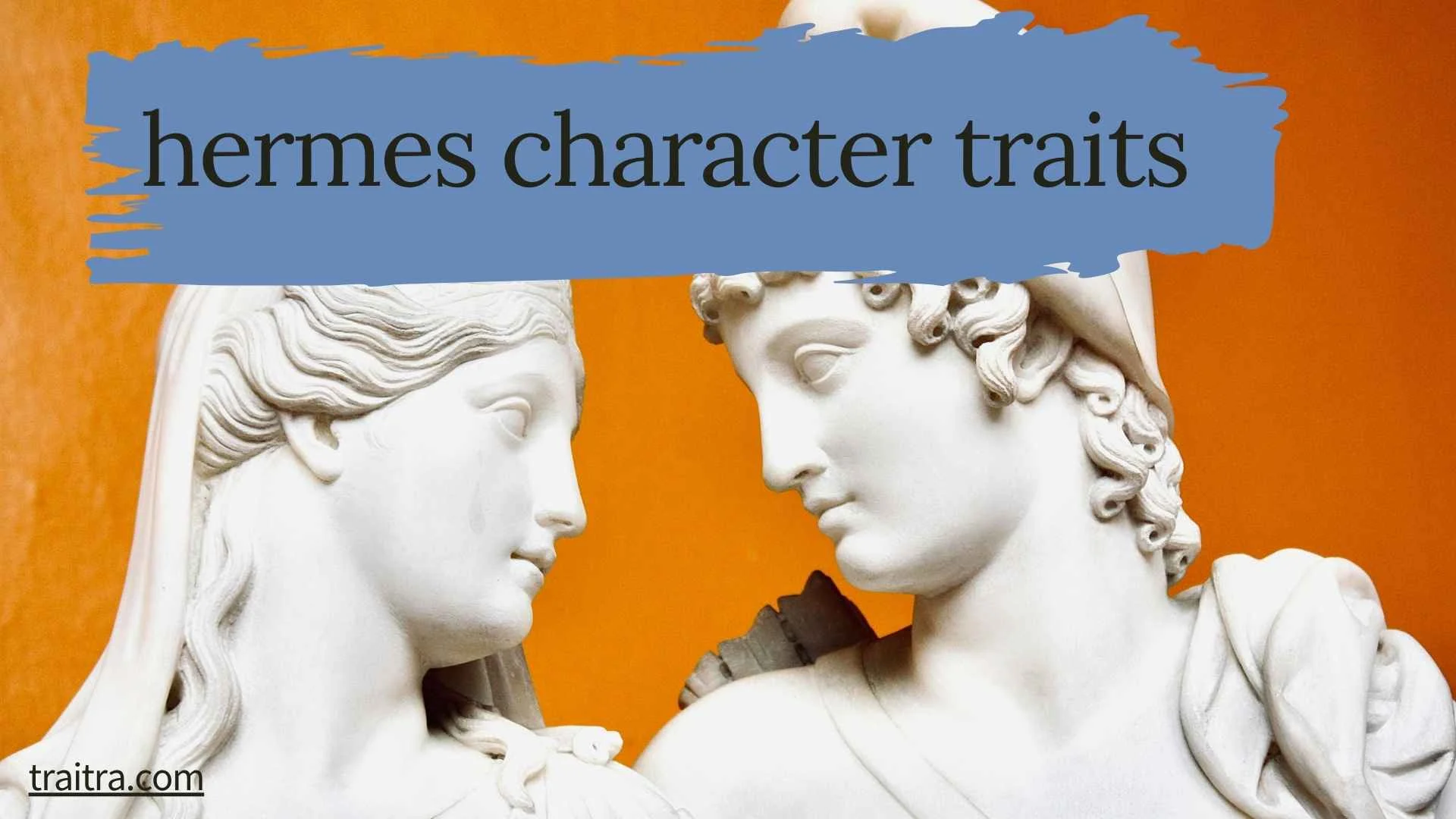
Hermes is one of the most clever, adaptable, and versatile gods in Greek mythology. Known as the messenger of the gods, he is associated with communication, travel, trade, intelligence, trickery, and speed. The most important Hermes character traits include cleverness, quick thinking, curiosity, charm, resourcefulness, mischief, and adaptability.
As the son of Zeus and Maia, Hermes stands out because he relies on intelligence rather than brute strength. He can solve problems, negotiate with others, cross boundaries between worlds, and use humor or deception to achieve his goals. Although he often helps gods and mortals, his playful and cunning nature also makes him an unpredictable trickster.
Understanding Hermes’ personality reveals why he holds such an important place in Greek mythology. His stories explore the relationship between intelligence and honesty, freedom and responsibility, and cleverness and manipulation. These qualities make him a fascinating character to study in mythology, literature, and modern storytelling.
hermes character traits: What Are Hermes’ Main Character Traits?
Hermes’ main character traits are intelligence, cleverness, adaptability, curiosity, speed, charm, resourcefulness, mischief, persuasive communication, and independence. As the Greek messenger god, he uses his quick mind and social skills to deliver messages, guide travelers, negotiate agreements, and overcome obstacles. His trickster nature makes him humorous and inventive but sometimes deceptive. Hermes represents both the positive power of intelligence and the ethical challenges that arise when cleverness is used to deceive others.
Hermes Character Traits at a Glance
| Character trait | Description | Mythological example |
| Cleverness | Finds inventive ways to solve problems | Steals Apollo’s cattle while concealing his tracks |
| Intelligence | Learns quickly and thinks strategically | Invents the lyre and uses it to win Apollo’s favor |
| Adaptability | Adjusts to changing situations | Serves as a messenger, guide, negotiator, and divine helper |
| Curiosity | Explores opportunities and tests boundaries | Demonstrates extraordinary initiative from infancy |
| Mischievousness | Enjoys pranks and playful deception | Tricks Apollo during the cattle theft |
| Charm | Wins others over through conversation | Uses music and persuasion to settle his conflict with Apollo |
| Resourcefulness | Makes useful things from available materials | Creates the lyre from a tortoise shell |
| Speed | Moves quickly between places and worlds | Travels as the messenger of the gods |
| Persuasiveness | Uses words to influence others | Negotiates with Apollo after being confronted |
| Independence | Acts on his own initiative | Undertakes bold actions without waiting for instructions |
| Diplomacy | Helps resolve disputes and deliver important messages | Acts as an intermediary between divine figures |
| Guide-like nature | Helps others navigate unfamiliar territory | Leads souls to the realm of the dead |
These traits are closely connected. Hermes’ intelligence supports his cleverness, his charm strengthens his persuasive ability, and his adaptability allows him to move between different roles with ease. However, his mischievousness also shows that being intelligent does not always mean behaving ethically.
Who Is Hermes in Greek Mythology?
Hermes is one of the twelve major Olympian gods in Greek mythology. He is the son of Zeus, king of the gods, and Maia, a nymph associated with Mount Cyllene. His many roles connect him with communication, travel, commerce, cleverness, invention, and the movement of souls between the world of the living and the underworld.
Theoi
+1
Unlike gods who are mainly known for strength, war, or wisdom, Hermes succeeds through a combination of mental agility, social intelligence, humor, and practical skill.
Why Is Hermes an Important Mythological Character?
Hermes is important because he connects people, places, and even different realms of existence. His responsibilities require him to understand different perspectives and respond quickly to changing circumstances.
His importance comes from several roles:
- Messenger of the gods: He carries messages and carries out instructions from Zeus and other divine figures.
- God of travel: He protects travelers and is associated with roads, boundaries, and safe passage.
- God of trade: He represents exchange, negotiation, commerce, and the skills needed to conduct business.
- Trickster figure: He uses deception, disguise, and clever schemes to achieve his goals.
- Inventor: He is associated with the invention of the lyre and other forms of ingenuity.
- Guide of souls: He leads the souls of the dead to the underworld, a role often described by the Greek term psychopompos.
Encyclopaedia Iranica
+2
These responsibilities explain why Hermes cannot be described as simply good, bad, playful, or serious. His character changes with the situation, but his intelligence and ability to navigate complex circumstances remain central.
12 Most Important Hermes Character Traits Explained
The defining qualities of Hermes become clearer when each trait is connected to a mythological event. The following sections explain what each characteristic means, how it appears in his stories, and what it reveals about his personality.
1. Cleverness
Cleverness is one of Hermes’ most recognizable character traits. He is skilled at finding unusual solutions, hiding his intentions, and using information to gain an advantage.
The clearest example appears in the Homeric Hymn to Hermes. Shortly after his birth, Hermes leaves his cradle and steals cattle belonging to Apollo. He uses tricks to make the trail difficult to follow and attempts to avoid detection.
His cleverness is not limited to stealing. When Apollo confronts him, Hermes relies on conversation, argument, and negotiation rather than physical force. His ability to think several steps ahead helps him manage a conflict that could have ended badly.
What this trait reveals: Hermes understands that success often depends on strategy, timing, and creativity rather than strength alone.
Everyday example: A student who struggles with a difficult assignment might approach the problem from a new angle instead of repeatedly using a method that does not work.
2. Intelligence
Hermes is intelligent because he can learn quickly, understand complicated situations, and turn ideas into useful results.
His intelligence is closely connected to invention. In the myth of his encounter with Apollo, Hermes creates a lyre using a tortoise shell and animal materials. He later uses music as part of the process that resolves their disagreement.
This episode presents intelligence as more than the ability to know facts. Hermes combines observation, technical skill, imagination, and social awareness.
He also understands that a useful invention can change a relationship. The lyre becomes a means of exchange between two gods who began the story in conflict.
What this trait reveals: Hermes uses knowledge to solve problems and create opportunities.
Everyday example: An employee notices that a team wastes time on repeated tasks, develops a simpler process, and presents the solution in a way that encourages colleagues to adopt it.
3. Adaptability
Adaptability is Hermes’ ability to move between different roles and respond to different expectations.
He serves as a divine messenger, protector of travelers, patron of trade, inventor, and guide of souls. Each role requires a different set of skills. A messenger must be reliable and clear, while a negotiator needs tact and an understanding of other people’s interests.
Hermes’ flexibility helps explain why he appears in so many different types of myths. He can act playfully in one story and perform a serious duty in another.
What this trait reveals: Hermes is not restricted to one way of acting. He adjusts his behavior to meet the demands of the moment.
Everyday example: A teacher changes an explanation when students do not understand it, using a drawing or demonstration instead of repeating the same words.
4. Mischievousness
Hermes has a playful, troublemaking side that often appears in his early myths. He enjoys testing limits, surprising others, and seeing whether he can escape the consequences of his actions.
His theft of Apollo’s cattle is a major example. The story presents the young Hermes as daring and amusing, but his behavior also creates a genuine dispute.
Mischievousness distinguishes Hermes from characters who always follow established rules. He enjoys exploring what he can get away with, even when his actions inconvenience someone else.
However, mischievousness should not be confused with harmless humor. Hermes’ pranks can cross into dishonesty, theft, and punishment.
What this trait reveals: Playfulness can show creativity and confidence, but it becomes harmful when it disregards other people’s rights.
Everyday example: A friend organizes a harmless surprise party and enjoys keeping it secret. The same impulse becomes problematic if the friend spreads a false rumor as a joke.
5. Persuasiveness
Hermes is persuasive because he knows how to use language, timing, and social awareness to influence others.
As the messenger and herald of the gods, he must communicate between powerful figures. His role requires more than delivering words. He often needs to present information clearly, negotiate difficult situations, and encourage others to listen.
His encounter with Apollo shows this skill in action. Hermes responds to an accusation with arguments and later offers the lyre, helping transform hostility into an exchange.
Persuasion can be constructive or manipulative. Hermes demonstrates both possibilities because he sometimes uses speech to settle disputes and sometimes uses it to conceal the truth.
What this trait reveals: Communication is most effective when a person understands both the message and the audience.
Everyday example: A project manager explains how a proposed change will help different team members rather than simply ordering everyone to accept it.
6. Resourcefulness
Resourcefulness means making the best use of whatever materials, knowledge, or opportunities are available. Hermes displays this trait by turning ordinary objects into useful creations.
The lyre is the strongest example. Rather than waiting for a ready-made instrument, he uses a tortoise shell and other available materials to create one.
His resourcefulness also appears in his ability to improvise during difficult encounters. He does not rely on a single plan when circumstances change.
This quality is especially important because Hermes often operates in uncertain situations. He needs to find a way forward even when the usual approach is unavailable.
What this trait reveals: A resourceful person focuses on possibilities instead of becoming stuck on limitations.
Everyday example: A small business owner with a limited budget uses existing equipment, customer feedback, and local partnerships to launch a new service.
7. Curiosity
Curiosity is reflected in Hermes’ eagerness to explore, experiment, and discover what he can accomplish.
The story of his infancy portrays him as remarkably active and inventive. He does not remain passive in his cradle. Instead, he ventures beyond familiar surroundings, encounters new possibilities, and creates something new.
His curiosity also fits his broader connection with travel, communication, learning, and invention. He is a figure who crosses boundaries and encounters unfamiliar situations.
Curiosity can support learning, but it needs direction. Hermes’ exploration sometimes leads to creative achievements and sometimes to trouble.
What this trait reveals: Asking questions and exploring possibilities can lead to discoveries, provided curiosity is balanced with responsibility.
Everyday example: A young reader becomes interested in ancient instruments, researches how they work, and builds a simple model to understand the principles behind them.
8. Charm
Hermes often comes across as charming because he combines quick speech, confidence, humor, and social awareness.
Charm helps him approach people with different interests and positions. As a messenger and negotiator, he must interact with gods and mortals rather than remain isolated from them.
His encounter with Apollo illustrates how a tense relationship can become more cooperative through communication and an appealing offering.
Nevertheless, charm is not the same as honesty. A charming person can use warmth to build trust or to distract others from questionable intentions.
What this trait reveals: Social appeal can open doors, but lasting trust depends on how a person behaves after gaining someone’s confidence.
Everyday example: A new employee builds friendly relationships across departments, making it easier to share information and coordinate projects.
9. Speed and Quick Thinking
Speed is a defining part of Hermes’ traditional image. His winged sandals and traveling equipment represent his ability to move swiftly between places.
Yet his speed also has a broader symbolic meaning. Hermes is quick to react, change plans, and respond to opportunities.
These qualities suit his work as a messenger. Messages must reach the right people, and unexpected problems may require immediate action. His quick thinking also helps him navigate conflicts before they become more difficult to manage.
What this trait reveals: Acting quickly is useful when paired with sound judgment. Speed without care can create mistakes.
Everyday example: During a presentation, a speaker notices that the slides are not working and switches to a clear verbal explanation instead of allowing the interruption to derail the meeting.
10. Independence
Hermes is independent and self-directed. His early adventures portray him as willing to take initiative without waiting for others to tell him what to do.
His decision to explore beyond his cradle and his invention of the lyre demonstrate this initiative. He seeks opportunities and develops his own methods of achieving his goals.
However, independence can become recklessness when it ignores rules or other people’s needs. Hermes’ cattle theft shows the difference between initiative and responsible action.
What this trait reveals: Independence is most effective when people combine confidence with accountability.
Everyday example: A student creates a study schedule, identifies weak areas, and seeks extra resources without waiting for a teacher to manage every step.
11. Diplomacy

Diplomacy is Hermes’ ability to communicate across disagreements and help different parties reach an understanding.
His messenger role places him between figures with different goals and levels of power. He must understand the situation, convey messages appropriately, and avoid creating unnecessary conflict.
His relationship with Apollo offers a useful example. Their disagreement over the stolen cattle eventually leads to an exchange involving Hermes’ lyre. The conflict becomes an opportunity for cooperation.
Diplomacy does not mean avoiding every disagreement. It means handling disagreement in a way that makes a workable solution possible.
What this trait reveals: A good mediator looks for common ground without pretending that the original conflict never happened.
Everyday example: Two coworkers disagree about project priorities. A team leader identifies their shared deadline, clarifies each person’s concerns, and helps them agree on a realistic division of work.
12. Cunning
Cunning is Hermes’ ability to use strategy, secrecy, and indirect methods to achieve a goal.
Although cunning overlaps with cleverness, the two traits are not identical. Cleverness is the broader ability to solve problems intelligently. Cunning often involves concealing intentions or outmaneuvering another person.
Hermes’ theft of Apollo’s cattle makes this distinction clear. He does not simply solve a problem; he deliberately attempts to prevent Apollo from discovering what happened.
In Greek mythology, cunning can be admired as a sign of skill, but it can also raise questions about fairness and trust.
What this trait reveals: Strategic thinking is powerful, but the morality of a strategy depends on its purpose and consequences.
Everyday example: A negotiator studies the other party’s priorities before proposing an agreement. This is constructive cunning if it helps both sides reach a fair outcome, but manipulation if it depends on deliberately misleading the other party.
Positive Character Traits of Hermes
Hermes has several positive qualities that make him a capable helper, inventor, and communicator. These strengths explain why he is respected despite his reputation for trickery.
| Positive trait | Why it matters | Example in Hermes’ stories |
| Intelligence | Helps him understand difficult situations | He invents the lyre |
| Creativity | Encourages original solutions | He makes an instrument from available materials |
| Adaptability | Allows him to handle different responsibilities | He serves as messenger and guide |
| Communication | Helps him connect people and convey messages | He acts as a herald for the gods |
| Persuasiveness | Supports negotiation and conflict resolution | He engages Apollo after the cattle theft |
| Resourcefulness | Helps him make use of limited resources | He turns a tortoise shell into part of an instrument |
| Initiative | Encourages action and exploration | He undertakes adventures from infancy |
| Quick thinking | Helps him respond to unexpected events | He improvises during his encounter with Apollo |
| Diplomacy | Helps bridge disagreements | His conflict with Apollo leads to an exchange |
| Curiosity | Encourages discovery and experimentation | His early adventures lead to invention |
How Hermes’ Positive Traits Work Together
Hermes’ greatest strength is not any single quality. It is the way his qualities support one another.
For example, intelligence helps him devise an idea, creativity helps him turn that idea into something useful, and communication helps him explain its value to another person. Adaptability allows him to change his approach if the first attempt fails.
This combination makes Hermes a useful model for understanding practical intelligence: knowing how to respond to a situation, not simply knowing information.
Key lesson: Intelligence becomes more valuable when it is paired with creativity, communication, and responsible decision-making.
Negative Character Traits of Hermes
Hermes also has flaws that make him a more complex mythological figure. His negative traits often emerge when he prioritizes personal advantage, excitement, or cleverness over honesty.
| Negative trait | How it appears | Possible consequence |
| Deceitfulness | Hides the truth about the cattle theft | Damages trust |
| Dishonesty | Uses misleading arguments to defend himself | Creates conflict |
| Mischievousness | Tests boundaries through pranks and tricks | Causes trouble for others |
| Manipulativeness | Uses his communication skills to influence situations indirectly | Can undermine fair decision-making |
| Impulsiveness | Acts boldly before considering all consequences | Creates unnecessary risks |
| Opportunism | Takes advantage of circumstances | May place personal gain above fairness |
| Rule-breaking | Ignores established expectations | Creates disputes and instability |
| Overconfidence | Appears willing to test his abilities against powerful figures | Can lead to reckless choices |
These traits should be understood within the stories rather than treated as a modern psychological diagnosis. Ancient myths use divine characters to explore conflicting values, and Hermes’ behavior is part of that storytelling tradition.
Why Is Hermes Considered a Trickster?
Hermes is considered a trickster because he uses deception, disguise, clever schemes, and unexpected solutions to challenge ordinary rules.
His theft of Apollo’s cattle is the classic example. Hermes attempts to conceal the theft and then uses verbal skill to defend himself when Apollo confronts him. The episode portrays him as inventive and entertaining while also showing that his intelligence can serve dishonest purposes.
Trickster figures often occupy a space between order and disorder. They expose weaknesses, challenge expectations, and create change. Hermes fits this pattern because his actions can cause trouble but also lead to unexpected discoveries and new relationships.
His trickster nature does not mean every action he takes is dishonest. He also performs legitimate duties as a messenger, protector, and guide.
The important distinction: Hermes is not merely a troublemaker. He is a character whose cleverness can either disrupt relationships or help resolve difficult situations.
Neutral Character Traits of Hermes
Some of Hermes’ qualities are neither inherently good nor bad. Their value depends on how he uses them.
| Neutral trait | Positive use | Negative use |
| Confidence | Helps him take initiative | Can become arrogance |
| Independence | Encourages self-reliance | Can lead to disregard for rules |
| Curiosity | Supports learning and invention | Can become intrusive behavior |
| Speed | Helps him deliver messages quickly | Can encourage hasty decisions |
| Persuasiveness | Helps people reach agreements | Can be used to manipulate |
| Strategic thinking | Helps solve complex problems | Can support deception |
| Playfulness | Makes interactions enjoyable | Can cross personal boundaries |
| Ambition | Encourages achievement | Can place personal gain above fairness |
This distinction is important when analyzing Hermes for a school assignment or literature essay. A trait describes a tendency, not an automatic moral judgment.
For instance, being persuasive is not inherently good or bad. A person who persuades a community to prepare for a storm uses communication constructively. Someone who persuades others to believe a deliberate lie uses the same general skill for a harmful purpose.
Hermes illustrates how the same ability can produce very different outcomes depending on intention and context.
Hermes’ Character Traits in the Myth of Apollo’s Cattle
The story of Hermes and Apollo’s cattle provides the clearest single example of his personality. It brings together his intelligence, inventiveness, mischievousness, cunning, and persuasive communication.
In the Homeric Hymn to Hermes, the young god leaves his cradle, steals cattle belonging to Apollo, and takes steps to make the theft difficult to trace. He then returns home and behaves as though nothing unusual has happened.
Apollo eventually discovers clues that point toward Hermes. When confronted, Hermes denies responsibility despite his involvement. Their dispute reaches Zeus, who orders Hermes to reveal where the cattle are.
The story does not end with punishment alone. Hermes plays the lyre he has invented, impressing Apollo. The two gods eventually exchange gifts and establish a more cooperative relationship.
Mythoi Koinoi
+1
What Does This Myth Reveal About Hermes?
1. He is unusually resourceful.
Hermes develops an elaborate plan and uses available resources to carry it out. His actions show that he enjoys finding unconventional solutions.
2. He is willing to deceive others.
Hermes attempts to avoid responsibility for the theft. His behavior demonstrates that intelligence does not always lead to honest decisions.
3. He can turn conflict into cooperation.
The lyre changes the direction of the dispute. Hermes’ invention creates a basis for exchange and a better relationship with Apollo.
What Is the Main Lesson of the Story?
The story shows that intelligence has more than one possible outcome. Hermes’ cleverness first creates a conflict, but his creativity and ability to engage Apollo help transform the situation.
The episode also complicates the idea of justice. Hermes does not simply become an honest character after the theft. Instead, the story uses humor, negotiation, and exchange to establish a relationship between two very different gods.
For readers, the most useful insight is that a person’s strengths and weaknesses may come from the same ability. Strategic thinking can help solve a problem, but it can also make deception more effective.
Hermes’ Character Traits as the Messenger of the Gods
Hermes’ role as messenger highlights a different side of his personality. Instead of focusing on theft and mischief, this role emphasizes communication, discretion, reliability, and diplomacy.
He serves Zeus and carries messages between divine figures. He can travel across boundaries and approach people who may not share the same goals. This makes him a natural intermediary.
Communication and Eloquence
Hermes is associated with skillful speech because a messenger must deliver information in a way that others can understand. His role connects him with eloquence, interpretation, and the exchange of ideas.
In a difficult situation, effective communication involves more than repeating a message. It may require choosing the right words, understanding the audience, and avoiding unnecessary confusion.
Diplomacy and Discretion
A messenger often handles sensitive information. Hermes’ role therefore fits the idea of discretion: understanding what must be communicated, to whom, and under what circumstances.
His stories do not portray him as perfectly honest in every situation. That contrast is part of his complexity. He can act as a trusted intermediary even though he sometimes uses communication to deceive.
Adaptability and Judgment
Hermes moves between different people and places. This requires him to adjust his behavior to the circumstances.
His messenger role demonstrates why adaptability matters. The same message may require a different approach depending on whether the recipient is angry, confused, powerful, or unfamiliar with the situation.
Practical lesson: Good communication combines clarity, audience awareness, and sound judgment. Being articulate is useful, but being trustworthy is what makes communication dependable.
Hermes’ Character Traits as the Guide of Souls
Hermes also serves as a guide for the souls of the dead, leading them toward the underworld. This role is commonly known as psychopompos, meaning a guide or conductor of souls.
Encyclopaedia Iranica
+1
This responsibility reveals a more serious side of his character.
Guidance
Hermes is not only a god who moves quickly between places. He also helps others make a difficult passage. As a guide, he accompanies souls rather than leaving them to navigate the transition alone.
This role highlights his association with movement, boundaries, and transitions between different states of existence.
Responsibility
His work as a divine guide contrasts with the irresponsible behavior seen in the cattle theft. It shows that Hermes is capable of carrying out important duties, not merely causing mischief.
Connection Between Worlds
Hermes’ role as a messenger and his role as a guide of souls share an important feature: both involve crossing boundaries. He moves between gods and mortals, different locations, and the world of the living and the realm of the dead.
This connection helps explain the unity behind his many responsibilities. Although his roles may seem unrelated, they all involve movement, communication, and passage.
Practical lesson: A flexible person can still be dependable. Adaptability is most valuable when it serves a clear responsibility rather than personal convenience.
Hermes’ Character Traits and His Relationship With Apollo
Hermes’ relationship with Apollo is one of the most revealing parts of his mythology. Apollo represents a very different style of divine power in the cattle-theft story: he is the owner of the stolen herd and the figure who seeks answers.
Hermes and Apollo initially appear as opponents. Hermes relies on secrecy, improvisation, and clever speech, while Apollo investigates the theft and demands an explanation.
Their disagreement eventually becomes a relationship of exchange. Hermes’ lyre impresses Apollo, and the instrument becomes central to their reconciliation.
| Hermes | Apollo |
| Associated with cunning and improvisation | Associated with music, prophecy, and other divine arts |
| Uses tricks to gain an advantage | Investigates the theft and confronts Hermes |
| Creates the lyre in the myth | Values the instrument and becomes closely associated with it |
| Responds through humor and negotiation | Moves from anger toward an exchange with Hermes |
| Represents flexibility and boundary-crossing | Often represents order, clarity, and structured artistic skill |
These descriptions highlight the contrast in this particular story rather than defining every appearance of either god.
What Does Their Relationship Teach Us?
The relationship shows that people with very different approaches can find common ground. Hermes’ ingenuity and Apollo’s appreciation of music create an opportunity for cooperation.
It also shows that reconciliation does not always require two people to become alike. Their differences remain part of their identities, but an exchange gives them a reason to work together.
In everyday life, this resembles a situation in which two coworkers disagree about how to solve a problem but eventually discover that their different skills complement each other.
Hermes Character Traits vs. Apollo Character Traits
The differences between Hermes and Apollo help clarify what makes Hermes distinctive.
| Feature | Hermes | Apollo |
| Main associations | Messages, travel, trade, cunning | Music, prophecy, healing, archery |
| Typical approach in the cattle myth | Improvisation and trickery | Investigation and confrontation |
| Communication style | Clever, persuasive, adaptable | Often associated with authoritative speech and prophecy |
| Creativity | Invention and practical ingenuity | Music and artistic accomplishment |
| Relationship to rules | Frequently tests boundaries | Often associated with order and structured divine authority |
| Defining contrast | Flexibility and cunning | Clarity and artistic order |
Both gods possess intelligence and creative ability. The difference lies in the qualities their stories emphasize and how they respond to the events around them.
How Hermes’ Character Traits Influence His Actions
Hermes’ personality is best understood by connecting his traits to the choices he makes. A trait becomes meaningful when it affects behavior and produces a result.
The following examples show how his defining qualities influence his actions across different situations.
| Situation | Trait involved | Effect |
| He leaves his cradle to explore | Curiosity and initiative | Begins an extraordinary adventure |
| He steals Apollo’s cattle | Cunning and mischievousness | Creates a conflict |
| He attempts to hide the trail | Strategic thinking | Makes the theft harder to investigate |
| He defends himself when confronted | Persuasiveness | Prolongs the disagreement |
| He invents the lyre | Creativity and resourcefulness | Produces a valuable musical instrument |
| He presents the lyre to Apollo | Diplomacy and ingenuity | Helps establish cooperation |
| He delivers divine messages | Communication and adaptability | Connects different divine figures |
| He guides souls | Responsibility and guidance | Helps souls pass into the underworld |
| He protects travelers | Helpfulness and practical judgment | Supports safe passage |
| He participates in divine affairs | Flexibility | Allows him to perform different duties |
These examples reveal a useful pattern: Hermes’ actions depend on both his personal qualities and the demands of the situation. His intelligence does not guarantee a positive outcome, but it gives him several ways to respond when circumstances change.
Hermes’ Symbols and What They Reveal About His Personality
Hermes’ symbols provide visual clues to his roles and character. Ancient Greek art often identifies him through his traveling equipment and herald’s staff.
Winged sandals
His winged sandals represent speed, mobility, and the ability to travel between places. They reflect his quick responses and his role as a messenger.
Caduceus
The caduceus is Hermes’ herald’s staff, traditionally shown with two entwined serpents. It is associated with his role as messenger and herald. It should not be confused with the rod of Asclepius, which has a single serpent and is associated with medicine.
Traveling hat
Hermes is often shown wearing a petasos, a broad-brimmed traveler’s hat that may have wings. It reinforces his connection with travel and movement.
Lyre
The lyre symbolizes invention, creativity, and musical skill. Its place in the cattle-theft myth also represents Hermes’ ability to turn a conflict into an exchange.
Herma
A herma was a boundary marker or pillar associated with Hermes. It reflects his connection with roads, boundaries, entrances, and transitions.
These symbols are more than decorative details. They connect Hermes’ physical appearance with the central ideas of his mythology: movement, communication, invention, and crossing boundaries.
Theoi
+2
Hermes’ Role in Greek Mythology and Ancient Greek Culture
Hermes’ personality reflects the range of activities associated with his worship in ancient Greece. His responsibilities extended beyond delivering messages.
Trade and Commerce
Hermes was associated with merchants, exchange, and commercial activity. His cleverness and persuasive speech fit the challenges of bargaining, assessing opportunities, and making agreements.
His connection with trade also reveals the mixed moral character of commerce in myth. Skillful negotiation can create mutual benefit, while trickery can give one person an unfair advantage.
Travel and Boundaries
Hermes was a protector of travelers and was associated with roads and boundaries. This role fits his ability to move between different places and social settings.
His connection with boundaries is especially meaningful. He is a figure who crosses borders, whether those borders separate cities, social groups, divine realms, or the living and the dead.
Language and Learning
Hermes was associated with eloquence and the effective use of speech. Later traditions also connected him with various forms of knowledge and invention.
His character therefore represents the practical power of language: words can communicate information, negotiate agreements, persuade an audience, and sometimes conceal the truth.
Why These Roles Matter
Hermes’ many responsibilities help explain why he is such a flexible mythological character. Travel requires adaptability, trade requires negotiation, invention requires creativity, and divine messages require communication.
Rather than representing one narrow quality, Hermes connects several abilities that help people navigate a complicated world.
Hermes Character Traits in Modern Literature and Storytelling
Hermes’ traits remain useful for understanding modern fictional characters. Writers often create memorable characters by combining admirable strengths with flaws that lead to conflict.
Hermes provides a classic example of this approach.
The Clever Trickster
A clever trickster relies on intelligence, humor, and unexpected solutions. Such a character might break a rule, outwit a stronger opponent, or expose a weakness in an established system.
Hermes fits this pattern because he often wins through strategy rather than force.
The Charming Negotiator
This character uses communication and social awareness to bring people together or persuade them to accept a proposal. Hermes’ messenger role makes him a strong mythological example.
However, a writer can make the character more complex by showing the difference between sincere persuasion and manipulation.
The Inventive Problem-Solver
An inventive character looks at familiar objects or situations in unfamiliar ways. Hermes’ invention of the lyre shows how creativity can emerge from ordinary materials and unexpected circumstances.
The Morally Ambiguous Hero
A morally ambiguous character has qualities that make readers admire them while also making choices that deserve criticism.
Hermes is an effective example because his cleverness and creativity are impressive, but his theft and deception cannot simply be treated as virtues.
Writing insight: A character becomes more believable when their strongest qualities sometimes create their biggest problems. Hermes’ intelligence makes him capable of invention and negotiation, but it also makes him a more effective trickster.
10 Real-Life Lessons From Hermes’ Character Traits
Hermes’ myths can be applied to everyday situations, provided readers distinguish between useful skills and behavior that causes harm.
1. Use intelligence to solve problems. Look for new approaches when a familiar method fails.
2. Stay adaptable. Be willing to change plans when new information becomes available.
3. Communicate clearly. Explain your ideas in ways that suit your audience.
4. Be resourceful. Make thoughtful use of the time, skills, and materials you already have.
5. Take initiative. Start working on a problem instead of waiting for someone else to handle every detail.
6. Use humor responsibly. A joke should not depend on humiliating another person or violating their trust.
7. Negotiate fairly. Understand what other people need and look for solutions that work for everyone involved.
8. Balance speed with judgment. Respond quickly when necessary, but check important facts before making a decision.
9. Keep curiosity constructive. Explore unfamiliar ideas while respecting other people’s privacy and boundaries.
10. Take responsibility for your choices. Being clever does not excuse dishonesty or remove the consequences of your actions.
These lessons highlight the difference between admiring Hermes’ abilities and copying every action he takes. His myths are most useful when readers consider both the advantages and the risks of his behavior.
Common Misconceptions About Hermes’ Character Traits
Several misunderstandings can lead to an incomplete picture of Hermes.
Myth 1: Hermes Is Only a Trickster
Fact: Trickery is an important part of his personality, but it is not his only role. He also serves as messenger, traveler’s protector, guide of souls, and a figure associated with trade and invention.
Encyclopaedia Iranica
+1
Myth 2: Hermes Is Always Dishonest
Fact: Hermes is known for deception in several myths, especially the cattle-theft story. However, his wider mythological role includes carrying messages and performing duties for the gods. His character combines trickery with service and responsibility.
Myth 3: Cleverness and Intelligence Mean the Same Thing
Fact: The terms overlap, but cleverness often emphasizes quick, inventive solutions, while intelligence is a broader ability to understand, learn, and reason. Hermes demonstrates both through his schemes and inventions.
Myth 4: Hermes Is the Same as the Roman God Mercury in Every Detail
Fact: Hermes was identified with the Roman god Mercury, and the two share many roles. However, Greek and Roman religious traditions developed in different historical and cultural settings, so their stories and emphases are not identical.
Encyclopaedia Iranica
+1
Myth 5: Hermes Invented the Lyre Because He Was Simply a Musician
Fact: In the Homeric Hymn to Hermes, the lyre’s invention demonstrates his ingenuity and resourcefulness. The story emphasizes his inventive mind and his relationship with Apollo, who becomes closely associated with the instrument.
Myth 6: All of Hermes’ Traits Are Positive
Fact: His cleverness, charm, and adaptability can be useful, but they can also support deception and manipulation. The myths present a complicated character rather than a perfect moral example.
Myth 7: His Winged Sandals Are His Only Important Symbol
Fact: Hermes is also associated with the caduceus, a traveler’s hat, and the herma. These symbols reflect his roles as messenger, guide, and protector of boundaries.
How to Analyze Hermes’ Character Traits in a School Essay
A strong character analysis should do more than list adjectives. It should connect a trait to a specific action and explain what that action reveals.
Use this simple framework:
Step 1: Identify the trait
Choose a quality such as cleverness, resourcefulness, or mischievousness.
Step 2: Find evidence
Select a mythological event that demonstrates the quality, such as the theft of Apollo’s cattle.
Step 3: Explain the connection
Describe how Hermes’ actions demonstrate the trait and why that quality matters.
Step 4: Consider the consequences
Explain whether the trait helps him, harms someone else, or produces mixed results.
Step 5: State the larger meaning
Connect the event to a broader idea, such as the difference between intelligence and morality.
Example Character Analysis Paragraph
Hermes is a clever and resourceful character in Greek mythology. In the Homeric Hymn to Hermes, he steals Apollo’s cattle and attempts to conceal his actions. This episode demonstrates his ability to plan, improvise, and use his intelligence to avoid detection. However, it also reveals his willingness to deceive others for personal advantage. His later use of the lyre to engage Apollo shows that the same creativity that contributed to the conflict can also help resolve it. Through Hermes, the myth explores both the power of intelligence and the importance of how it is used.
This approach is stronger than simply calling Hermes clever because it provides evidence, explains the trait, and recognizes the character’s complexity.
Frequently Asked Questions About Hermes Character Traits
What are the five main character traits of Hermes?
The five main character traits of Hermes are cleverness, intelligence, adaptability, mischievousness, and persuasiveness. These qualities explain how he solves problems, invents new things, navigates conflicts, and sometimes deceives others.
Is Hermes a good or bad character?
Hermes is a morally complex character rather than purely good or bad. He performs important duties as a messenger and guide, but he also steals, tricks others, and uses deception. His myths explore both the benefits and the dangers of cleverness.
What is Hermes’ greatest strength?
Hermes’ greatest strength is his resourceful intelligence. He combines quick thinking, creativity, and communication to respond to difficult situations. His invention of the lyre and his interactions with Apollo demonstrate how he uses these abilities.
What is Hermes’ greatest weakness?
His greatest weakness is his willingness to use intelligence for deception and personal advantage. His theft of Apollo’s cattle shows that his cleverness can create conflict when he ignores honesty and responsibility.
Why is Hermes considered clever?
Hermes is considered clever because he develops elaborate plans, finds unconventional solutions, and uses language strategically. His attempt to conceal the cattle theft and his invention of the lyre demonstrate different forms of ingenuity.
Is Hermes a trickster god?
Yes. Hermes is widely recognized as a trickster god because he uses schemes, deception, and clever improvisation to challenge expectations. However, he also serves as a messenger, protector of travelers, and guide of souls.
Is Hermes intelligent or wise?
Hermes is especially known for intelligence, cunning, and practical ingenuity. Wisdom involves judging what is right or beneficial in the long term. His myths suggest that he can be highly intelligent without always making wise or ethical choices.
What are Hermes’ positive and negative traits?
His positive traits include intelligence, creativity, adaptability, resourcefulness, charm, and persuasive communication. His negative traits include deceitfulness, mischievousness, manipulation, and a willingness to break rules for personal advantage.
How does Hermes show leadership?
Hermes shows leadership through initiative, adaptability, communication, and negotiation. He takes action without waiting for instructions and can navigate complex situations. However, his stories also show that effective leadership requires accountability, not merely cleverness.
What symbols represent Hermes’ personality?
His main symbols include winged sandals, the caduceus, a traveler’s hat, and the herma. The sandals represent speed, the staff reflects his role as herald, the hat emphasizes travel, and the herma connects him with roads and boundaries.
What does Hermes teach us about human nature?
Hermes illustrates that intelligence and morality are separate qualities. A clever person can solve difficult problems, invent useful things, or manipulate others. His myths encourage readers to consider not only what a person can accomplish but also how and why they accomplish it.
What is the difference between Hermes and Mercury?
Hermes is the Greek god, while Mercury is his Roman counterpart. The Romans identified the two deities and shared many of Hermes’ associations with travel, communication, and commerce. However, the traditions surrounding each god developed within different religious cultures.
Why is Hermes important in Greek mythology?
Hermes is important because he connects gods and mortals, supports travel and trade, carries messages, and guides souls to the underworld. His clever and adaptable personality also makes him central to stories about invention, conflict, and negotiation.
What is a good sentence describing Hermes’ character?
Hermes is a clever, resourceful, and adaptable Greek god whose charm and quick thinking make him an effective messenger, while his mischievousness and cunning reveal the risks of using intelligence dishonestly.
Key Takeaways About Hermes’ Personality
- Hermes is the Greek god associated with messages, travel, trade, cunning, and the guidance of souls.
- His most important character traits include cleverness, intelligence, adaptability, resourcefulness, curiosity, charm, and persuasiveness.
- His theft of Apollo’s cattle demonstrates both his ingenuity and his willingness to deceive.
- His invention of the lyre highlights creativity and the ability to turn available resources into something valuable.
- His role as messenger emphasizes communication, diplomacy, and adaptability.
- His role as a guide of souls reveals a more serious and responsible side of his character.
- His strengths can become weaknesses when he uses them without regard for honesty or fairness.
- Hermes is best understood as a complex trickster whose stories explore the relationship between intelligence, morality, and responsibility.
Conclusion
The most important Hermes character traits are cleverness, intelligence, adaptability, resourcefulness, charm, curiosity, and cunning. Together, these qualities make him one of the most versatile and memorable figures in Greek mythology.
His stories reveal more than a god who enjoys tricks. As the messenger of the gods, Hermes connects different worlds and communicates important messages. As an inventor, he demonstrates creativity and practical intelligence. As a trickster, he challenges rules and exposes the complicated relationship between cleverness and honesty. His role as a guide of souls adds a serious dimension to his personality.
The story of Hermes and Apollo’s cattle captures this complexity particularly well. Hermes uses his intelligence to commit a theft, but his creativity also helps transform the resulting conflict into cooperation. The lesson is not that deception is admirable, but that intelligence can produce very different outcomes depending on how it is used.
Ultimately, Hermes remains fascinating because his strengths and weaknesses are closely connected. He shows that being clever is valuable, but using that cleverness responsibly is what makes the difference between solving a problem and creating one.

I am Isla Kensington, a curious writer who loves exploring the personality traits that influence how people think, feel, and behave. My work focuses on making complex human characteristics easy to understand. I write practical and engaging content that helps readers discover the qualities that shape their identity.
Books:
- Discovering the Traits Within You
- The Everyday Guide to Personality Traits