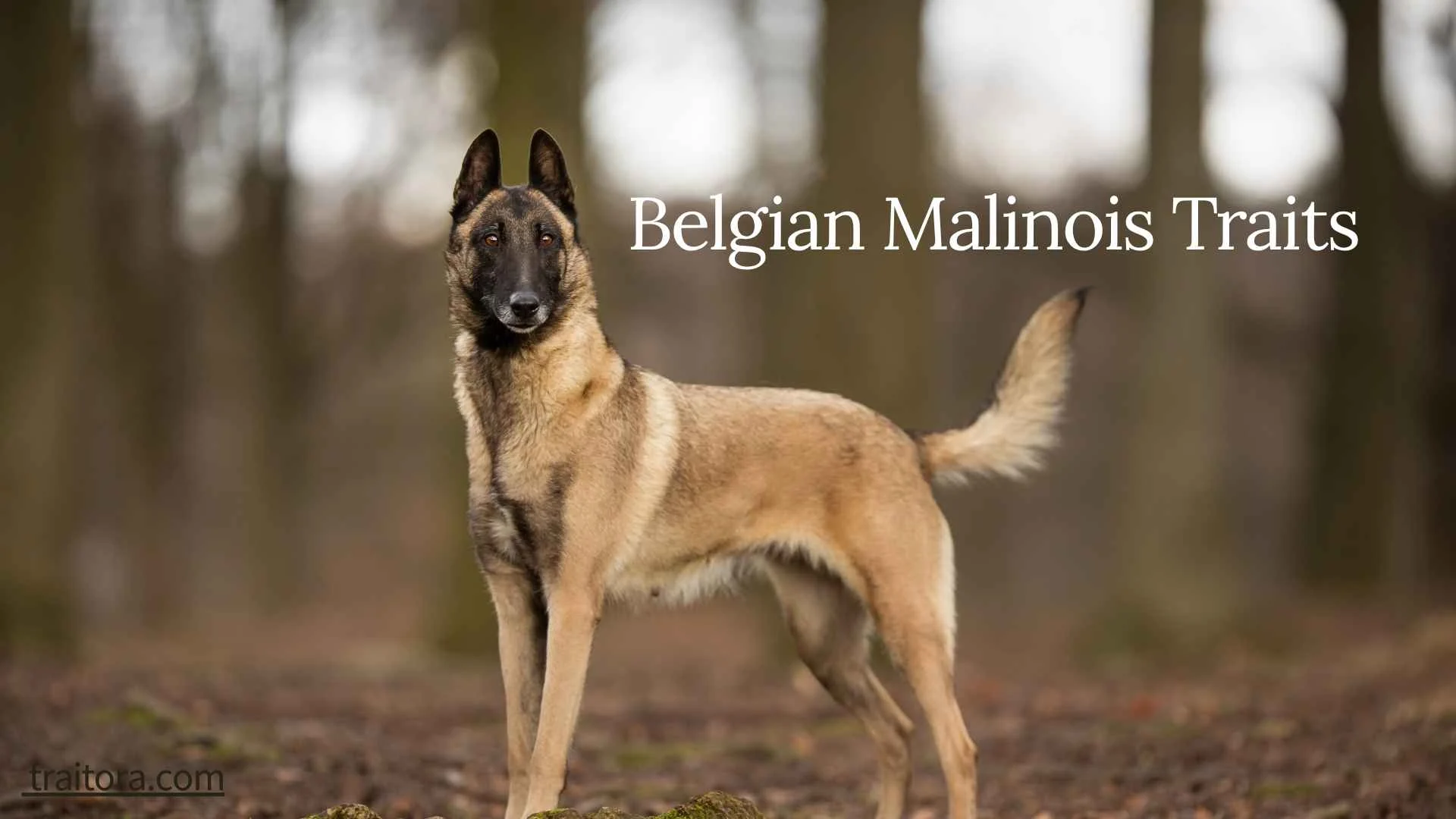
The Belgian Malinois is an intelligent, energetic, loyal, and highly driven dog known for its exceptional work ethic and strong protective instincts. Originally bred in Belgium as a herding dog, this athletic breed is now widely used in police work, military operations, search and rescue, and competitive dog sports.
The most common Belgian Malinois traits include high intelligence, confidence, alertness, loyalty, intense energy, strong prey drive, and a desire to work. These qualities make the breed an excellent companion for experienced, active owners but can create challenges for people who cannot provide enough exercise, training, and mental stimulation.
Understanding the Belgian Malinois temperament, physical characteristics, behavioral tendencies, strengths, and weaknesses is essential before bringing one home.
Quick Answer: What Are the Main Belgian Malinois Traits?
Belgian Malinois dogs are intelligent, energetic, confident, loyal, alert, protective, and highly trainable. They form strong bonds with their owners and thrive when given structured exercise, mental challenges, and meaningful tasks. However, their intense working drive and high activity needs make them better suited to experienced, active households than sedentary or first-time owners.
Belgian Malinois Trait Overview
| Trait | Description |
| Intelligence | Learns commands and tasks quickly |
| Energy level | Extremely high |
| Loyalty | Forms strong bonds with family |
| Temperament | Alert, confident, responsive, and driven |
| Trainability | Highly trainable with consistent methods |
| Protective instinct | Naturally watchful and attentive |
| Work drive | Strong desire to perform tasks |
| Social behavior | May be reserved with unfamiliar people |
| Prey drive | Often strong; may chase moving animals |
| Exercise needs | Requires substantial daily activity |
| Grooming | Moderate; sheds throughout the year |
| Family suitability | Best for active, experienced households |
| Lifespan | Commonly around 12–14 years, sometimes longer |
Individual dogs may differ based on genetics, breeding lines, socialization, training, health, and environment.
What Is a Belgian Malinois?
The Belgian Malinois is one of four Belgian herding dog varieties, alongside the Belgian Tervuren, Belgian Groenendael, and Belgian Laekenois.
The breed takes its name from the Belgian city of Malines, also known as Mechelen. It was originally developed to herd and protect livestock, requiring intelligence, stamina, alertness, and the ability to work closely with people.
Today, Belgian Malinois dogs are commonly found in:
- Police and military work
- Search-and-rescue operations
- Detection work
- Competitive obedience
- Agility and dog sports
- Herding activities
- Active companionship
Their working background explains why they often need more than ordinary walks and casual play. A Malinois usually benefits from having a purpose, a predictable routine, and regular opportunities to use its mind and body.
Belgian Malinois Personality Traits
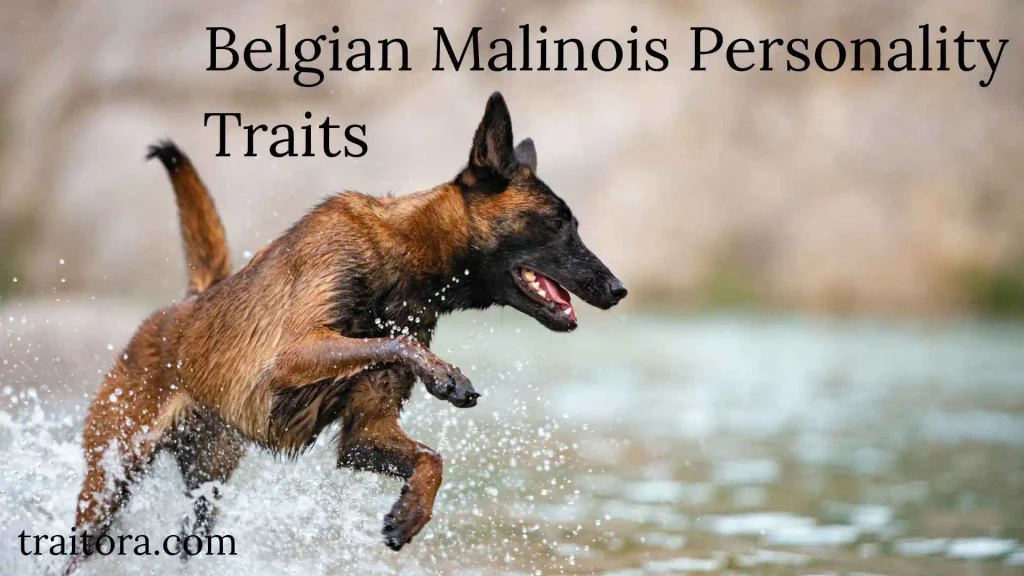
Belgian Malinois dogs typically have an intense, energetic, and people-focused personality. They often want to participate in whatever their owners are doing, whether it involves training, hiking, playing, or learning a new task.
1. Highly Intelligent
Intelligence is one of the most recognizable Belgian Malinois traits.
These dogs are quick learners with strong problem-solving abilities. They can understand commands, recognize routines, and remember patterns after consistent practice.
Their intelligence can be rewarding, but it also means they may learn unwanted habits just as quickly as desirable ones.
How intelligence appears in everyday life:
- Learning household routines quickly
- Remembering training exercises
- Anticipating activities based on small cues
- Figuring out how to reach food or toys
- Becoming bored with repetitive tasks
Training tip: Keep lessons interesting, introduce new skills gradually, and reward calm behavior as well as active performance.
2. Extremely Energetic
Belgian Malinois dogs have very high energy levels.
Their athletic bodies and working background give them impressive stamina. A short walk around the block may not provide enough activity for many individuals.
They generally benefit from a balanced combination of:
- Brisk walks
- Structured play
- Obedience training
- Hiking or suitable outdoor activities
- Scent games
- Interactive toys
- Calmness and settling exercises
Exercise needs depend on age, health, fitness, and individual temperament. Puppies should not be pushed into excessive high-impact activity while their joints are developing.
3. Loyal and Devoted
Belgian Malinois dogs often develop strong attachments to their owners.
They may follow family members around the house, seek interaction, and enjoy working closely with a trusted person. This loyalty can make them devoted companions when their needs are met.
However, loyalty does not mean a dog will automatically feel comfortable being left alone.
For example, a Malinois may happily accompany its owner on a long hike but struggle if suddenly left alone for an entire workday without preparation.
Gradual independence training helps the dog develop confidence when separated from its family.
4. Alert and Watchful
A Belgian Malinois is naturally attentive to its surroundings.
It may notice unfamiliar sounds, approaching visitors, animals, or changes in its environment before other household members do.
This trait can be useful in working roles, but excessive alertness may lead to barking or reactivity if the dog is not taught how to respond calmly.
The goal is to teach the dog that noticing something does not always require action.
5. Confident and Courageous
A well-socialized Belgian Malinois often shows confidence in unfamiliar situations.
Confidence means the dog can explore new experiences without becoming excessively fearful or overwhelmed. It does not mean the dog should be encouraged to confront people or animals.
A confident Malinois should be able to:
- Explore unfamiliar environments at a comfortable pace
- Recover after a startling experience
- Respond to its handler around distractions
- Remain manageable in public settings
Confidence develops through positive experiences, appropriate training, and genetic influences.
6. Protective and Territorial
Belgian Malinois dogs may be naturally watchful around their homes and families.
Some individuals are reserved with strangers, while others are more socially outgoing. Protective behavior should not be confused with uncontrolled aggression.
Responsible training teaches the dog to:
- Accept visitors calmly
- Respond to a reliable recall
- Disengage from unfamiliar people
- Remain under control in public
- Avoid reacting aggressively to ordinary situations
A dog does not need aggression training to be loyal or protective.
7. Playful and Intense
Many Malinois dogs remain playful well into adulthood.
They often enjoy tug games, retrieving, structured chase games with toys, and interactive training sessions.
Their play style may be fast, physical, and intense. Teaching clear start-and-stop cues helps prevent play from becoming overwhelming.
8. Independent Yet Eager to Work

Although Belgian Malinois dogs are highly responsive to their handlers, they can also show independent decision-making.
This combination is useful in working environments where dogs must solve problems while remaining connected to their handlers.
Training should build cooperation and communication rather than relying only on repetition or physical control.
Belgian Malinois Physical Traits
Belgian Malinois dogs have a lean, muscular, athletic build designed for speed, endurance, and agility.
Their physical features support their original herding role and modern working activities.
Height and Weight
| Feature | Typical Range |
| Male height | 24–26 inches |
| Female height | 22–24 inches |
| Male weight | Approximately 55–66 pounds |
| Female weight | Approximately 40–55 pounds |
| Body type | Lean, muscular, athletic |
| Coat | Short, dense double coat |
| Coat color | Fawn to mahogany with black overlay |
| Face | Distinctive black mask |
| Ears | Upright and triangular |
Measurements vary by individual and breed standard.
Coat and Shedding
The Belgian Malinois has a short, weather-resistant double coat with a dense undercoat.
Its coat is relatively easy to maintain, but shedding can be noticeable throughout the year, especially during seasonal coat changes.
Basic grooming includes:
- Brushing once or twice a week
- More frequent brushing during heavy shedding
- Regular nail trimming
- Routine ear checks
- Dental care and tooth brushing
- Occasional bathing when needed
Athletic Body Structure
A Malinois has long legs, strong hindquarters, a deep chest, and a balanced body.
These features help the dog accelerate quickly, change direction, jump, and maintain activity over long periods.
Its athletic appearance should not be mistaken for a need to exercise constantly. Rest, recovery, and controlled activity are essential for long-term health.
Belgian Malinois Behavioral Traits
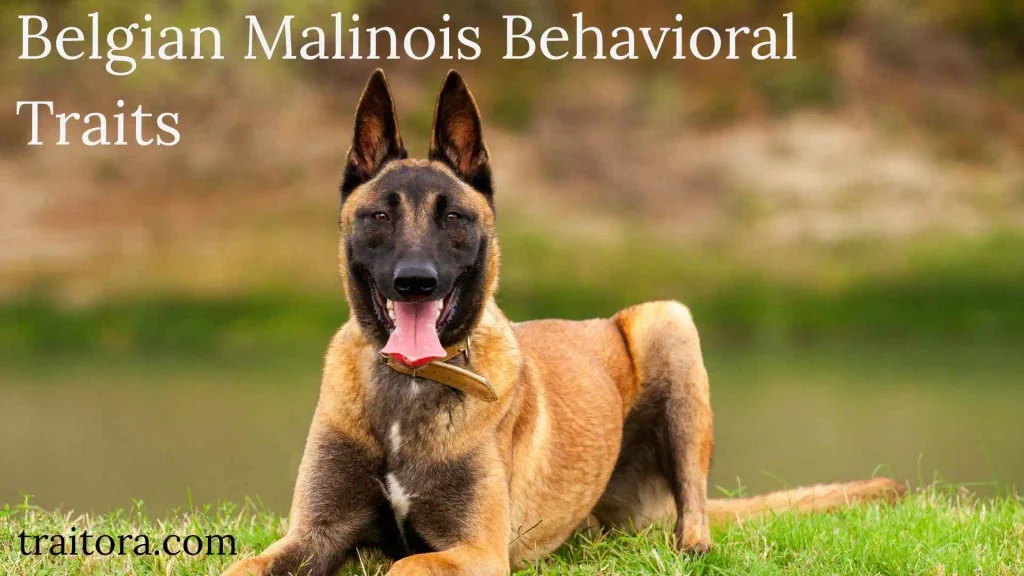
Belgian Malinois behavior is strongly influenced by its herding and working background.
Many individuals have a natural tendency to chase movement, monitor their surroundings, and seek interaction with their handlers.
Strong Prey Drive
Prey drive is the instinct to notice, pursue, and sometimes grab moving objects or animals.
In a Belgian Malinois, this may appear as:
- Chasing squirrels or rabbits
- Fixating on moving toys
- Pursuing bicycles or joggers
- Chasing other pets
- Grabbing objects during play
Prey drive is not the same as aggression. It is an instinctive behavior that needs appropriate outlets and reliable training.
Helpful approach: Use controlled games, reward disengagement, and teach recall and impulse control in low-distraction environments before practicing around moving triggers.
Herding Instincts
Some Malinois dogs may try to control movement by circling, chasing, or nipping at heels.
This behavior can become a problem around children, guests, or other pets.
For example, a dog may chase children running through the yard because their movement resembles livestock behavior.
Redirecting the dog toward structured activities and rewarding calm observation can help manage these instincts.
High Work Drive
A Belgian Malinois often enjoys having a clear purpose.
Its work drive may appear through enthusiasm for obedience exercises, scent detection, retrieving, tracking, or other structured tasks.
However, constant high-intensity activity can create an overly aroused dog that struggles to relax.
A balanced routine includes active work and calm activities such as chewing, sniffing, resting, and settling on a mat.
Sensitivity to the Environment
Malinois dogs can be highly responsive to sounds, movement, and changes in their surroundings.
This sensitivity may make them excellent detection or working dogs, but it can also contribute to stress in busy environments.
Early positive exposure to different people, surfaces, sounds, and settings helps build confidence.
The aim is to create a dog that can notice its surroundings without reacting to everything.
Belgian Malinois Temperament With Families
Belgian Malinois dogs can be affectionate and devoted family companions when their temperament, training, and lifestyle needs are a good match.
Their suitability depends less on the size of the home and more on the owner’s ability to provide structure, exercise, supervision, and training.
Are Belgian Malinois Good With Children?
Some Malinois do well with children, especially when raised and trained in a suitable environment. However, their intensity, size, and herding instincts require careful management.
Families should:
- Supervise all interactions with young children
- Teach children not to grab, chase, or disturb the dog
- Provide a quiet resting area
- Prevent rough play and uncontrolled chasing
- Reward calm behavior around children
- Separate the dog when supervision is unavailable
A Malinois may be better suited to a household with older children who understand how to interact safely with dogs.
Are Belgian Malinois Good With Other Dogs?
Their behavior around other dogs varies.
Some are social and enjoy canine companionship, while others may be selective, territorial, or overly intense during play.
Early socialization and controlled introductions can help, but socialization does not guarantee that every Malinois will enjoy every dog.
Choose compatible playmates and avoid forcing interactions.
Are Belgian Malinois Good With Cats?
A Malinois can sometimes live successfully with cats, especially when introduced gradually and taught to remain calm.
However, its prey drive may make chasing a concern.
A safer introduction plan includes:
- Keeping the animals separated initially.
- Allowing them to become familiar with each other’s scent.
- Using barriers and controlled visual introductions.
- Rewarding the dog for calm behavior.
- Providing the cat with escape routes and elevated spaces.
- Never leaving them together unsupervised until safety is well established.
Some dogs may never be safe around cats or small animals. Individual temperament matters.
Positive and Challenging Belgian Malinois Traits
Belgian Malinois traits can be valuable or difficult depending on the environment.
| Positive Trait | Possible Challenge |
| Intelligence | Can become bored or find its own activities |
| Loyalty | May become overly dependent on its owner |
| Alertness | Can bark excessively |
| Protectiveness | May become territorial without guidance |
| High energy | Can become destructive when under-stimulated |
| Confidence | May need careful management around unfamiliar dogs |
| Strong prey drive | Can chase animals or moving objects |
| Work drive | May struggle to settle without training |
| Athletic ability | Needs safe exercise and injury prevention |
| Quick learning | Can develop unwanted habits quickly |
The most important lesson is that a strong trait is not automatically a good trait in every situation.
A highly alert dog needs to learn when to ignore a sound. A fast learner needs consistent rules. A protective dog needs calm social skills.
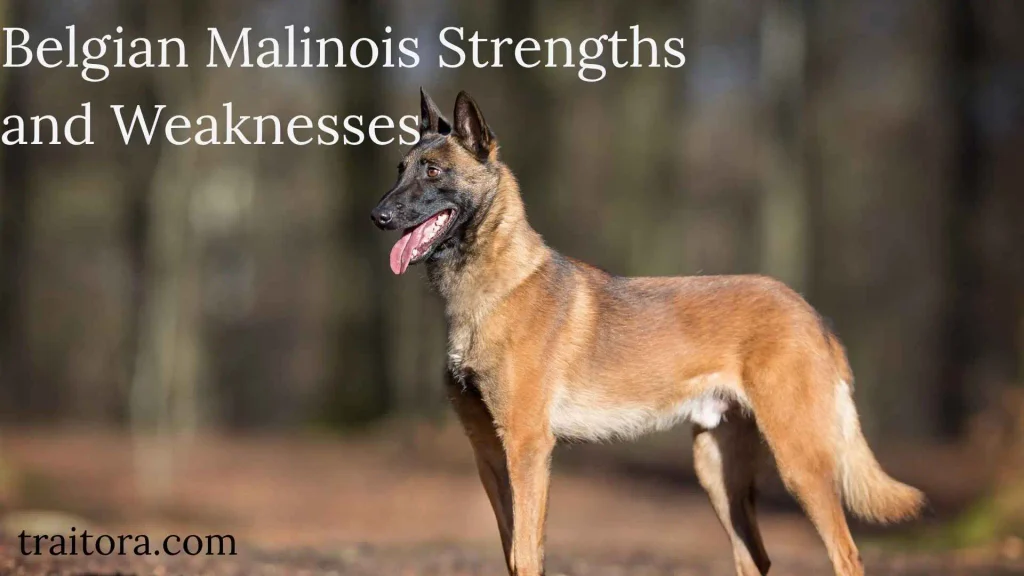
Belgian Malinois Strengths and Weaknesses
Strengths
- Exceptional intelligence and trainability
- Strong loyalty to trusted people
- High athletic ability and stamina
- Excellent potential for working tasks
- Strong responsiveness to structured training
- Versatility in dog sports and service work
- Natural alertness and awareness
- Enjoyment of interactive activities
Weaknesses
- Very high daily activity requirements
- Can be challenging for inexperienced owners
- May develop destructive habits when bored
- Strong chasing and herding instincts
- Potential for reactivity without suitable training
- May struggle with long periods alone
- Requires consistent structure throughout life
- Can be too intense for a low-activity household
These are breed tendencies, not guarantees. A well-matched individual may be easier to manage than expected, while a high-drive working-line dog may require substantially more expertise.
Belgian Malinois Training Traits
Belgian Malinois dogs are highly trainable, but their intelligence and intensity make training quality especially important.
Best Training Methods
Reward-based training is a practical foundation for teaching obedience, manners, and self-control.
Effective methods include:
- Rewarding desired behavior with food, toys, or play
- Keeping sessions short and focused
- Teaching one skill at a time
- Gradually increasing distractions
- Practicing calm behavior between activities
- Using clear and consistent cues
- Avoiding punishment that creates fear or confusion
A Malinois may become frustrated when training is repetitive or unclear. Variety and precise timing help maintain engagement.
Essential Commands
| Command | Why It Matters |
| Sit | Builds basic control |
| Down | Encourages settling |
| Stay | Supports impulse control |
| Come | Essential for safety |
| Leave it | Prevents grabbing unsafe objects |
| Drop it | Helps release toys or items |
| Place | Teaches calm behavior in a designated spot |
| Heel | Improves leash control |
| Wait | Builds patience at doors and crossings |
| Quiet | Helps manage alert barking |
Reliable responses take time and practice, especially around distractions.
Why Socialization Matters
Socialization means helping a dog develop comfortable, appropriate responses to different people, animals, places, and experiences.
For a Malinois, early socialization should focus on calm exposure rather than greeting everyone.
A useful goal is a dog that can walk past strangers, remain relaxed around ordinary sounds, and respond to its handler in new environments.
Puppy classes and guidance from a qualified trainer can help establish these skills.
Belgian Malinois Exercise and Mental Stimulation Needs
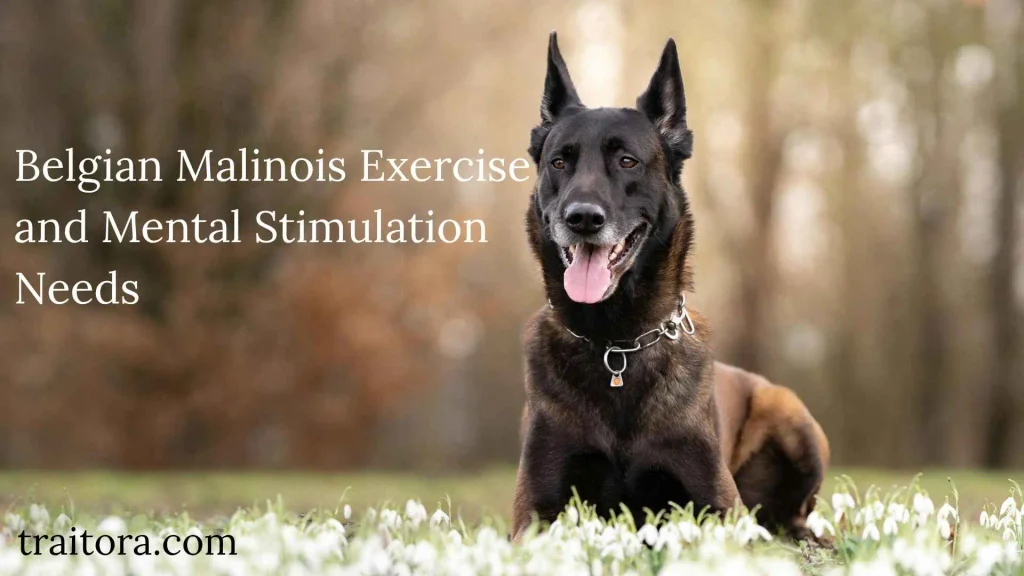
Belgian Malinois dogs need substantial daily exercise and mental engagement. Their needs cannot be met by simply leaving them in a yard.
A balanced routine may include:
- Structured walks
- Obedience training
- Scent-based games
- Fetch or controlled tug
- Hiking or other suitable outdoor activities
- Food puzzles
- Calm indoor enrichment
- Rest periods
The exact amount depends on age, health, fitness, and working drive.
Sample Daily Routine
| Time | Activity |
| Morning | Walk, sniffing, and obedience practice |
| Late morning | Rest and food puzzle |
| Afternoon | Short training session or enrichment |
| Evening | Structured play or outdoor activity |
| Night | Calm interaction and settling practice |
The goal is not to exhaust the dog every day. It is to create a predictable balance between activity, learning, and rest.
Signs a Malinois Needs More Support
Possible signs of insufficient enrichment or poor arousal management include:
- Persistent pacing
- Destructive chewing
- Excessive barking
- Repeated attention-seeking
- Difficulty settling
- Chasing or nipping behaviors
- Frantic play that is hard to interrupt
These behaviors can also have other causes, including stress, pain, or inadequate sleep. If behavior changes suddenly, consult a veterinarian.
Are Belgian Malinois Good for First-Time Owners?
Belgian Malinois dogs are generally not the easiest choice for first-time dog owners.
Their high energy, strong instincts, and need for consistent training can overwhelm someone who has never managed an active working breed.
A first-time owner may be successful if they have substantial time, access to professional training, and a realistic understanding of the breed.
Who Is a Good Match?
A suitable owner is someone who:
- Enjoys daily outdoor activities
- Has time for regular training
- Can provide structure and consistency
- Understands canine body language
- Can manage a strong, athletic dog
- Is willing to seek professional guidance
- Wants an interactive working companion
Who Should Consider Another Breed?
A different breed may be a better fit if you:
- Prefer a relaxed, low-energy companion
- Work long hours without support for dog care
- Have little interest in training
- Want a dog that is naturally comfortable with everyone
- Cannot safely manage chasing or guarding behaviors
- Expect a dog to entertain itself in the backyard
Decision guide:
- Want a calm, low-maintenance pet? Consider a less demanding breed.
- Want an active companion for hiking and training? A Malinois may be worth considering.
- Want a working or sport dog? Research the dog’s specific breeding and drive level.
- Want a family pet? Evaluate the individual dog’s temperament and your household’s ability to manage its needs.
Belgian Malinois vs. German Shepherd Traits
Belgian Malinois and German Shepherds share herding ancestry, intelligence, loyalty, and working ability. However, they often differ in build, activity level, and working style.
| Trait | Belgian Malinois | German Shepherd |
| Energy | Typically extremely high | High, with individual variation |
| Build | Lean and agile | Generally larger and more substantial |
| Working style | Fast, intense, highly driven | Versatile, often more measured |
| Training | Very responsive and energetic | Highly trainable and versatile |
| Protective instinct | Often strong | Often strong |
| Exercise needs | Very high | High |
| Family suitability | Best with active, experienced homes | Can suit a wider range of active homes |
| Grooming | Short coat, regular shedding | Often heavier shedding, especially in long or dense coats |
Neither breed is automatically better. The best choice depends on the individual dog, breeding line, training, and owner’s lifestyle.
Belgian Malinois vs. Belgian Shepherd Traits
The Belgian Malinois is one variety of the Belgian Shepherd breed group.
The four commonly recognized varieties are:
| Variety | Coat | General Appearance |
| Belgian Malinois | Short-haired | Fawn to mahogany with black mask |
| Belgian Tervuren | Long-haired | Commonly fawn or gray with black overlay |
| Belgian Groenendael | Long-haired | Typically solid black |
| Belgian Laekenois | Rough, wiry coat | Fawn with darker shading |
All four varieties share herding ancestry and many behavioral tendencies, but coat type and individual temperament differ.
Belgian Malinois Traits by Age
A Malinois’s behavior changes as it matures. Training and expectations should reflect its developmental stage.
Belgian Malinois Puppy Traits
Malinois puppies are often curious, playful, energetic, and eager to explore.
Common puppy behaviors include:
- Mouthing and chewing
- Chasing moving objects
- Short bursts of intense play
- Testing boundaries
- Learning household routines
- Needing frequent naps
Early training should focus on socialization, bite inhibition, handling, recall, crate comfort, and calm behavior.
Adolescent Belgian Malinois Traits
Adolescence can bring increased strength, energy, and distraction.
A young Malinois may appear to forget familiar commands when excited. This is a normal training challenge, not necessarily stubbornness.
Owners should continue practicing foundational skills in different environments while avoiding excessive physical strain.
Adult Belgian Malinois Traits
Adult dogs often show more predictable behavior when properly trained and exercised.
Their work drive, athleticism, and alertness may remain strong throughout adulthood.
A mature Malinois still needs regular activity, enrichment, interaction, and opportunities to use its abilities.
Senior Belgian Malinois Traits
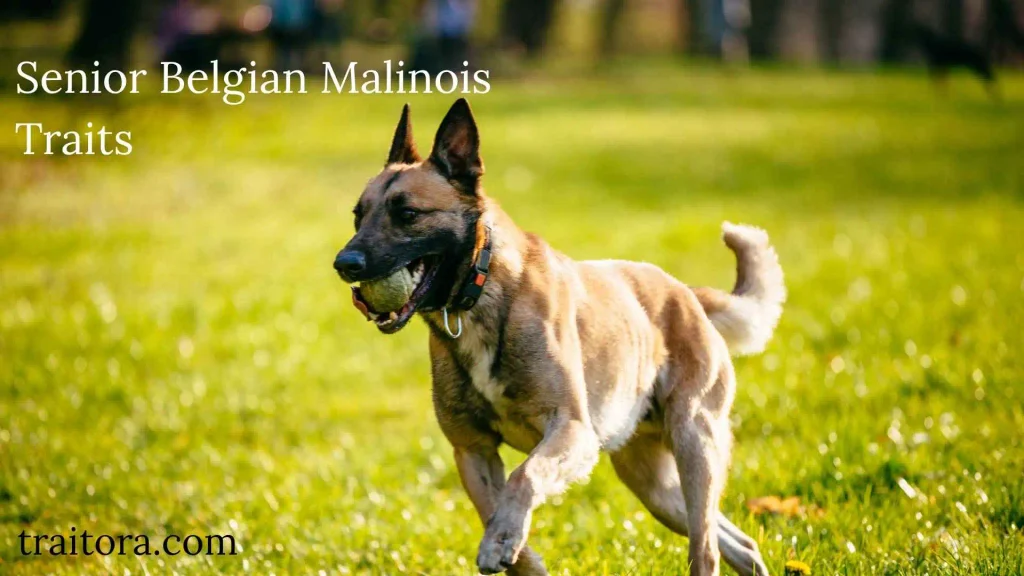
Older Malinois dogs may become less active and need adjustments to their routine.
Helpful changes include:
- Shorter, more frequent walks
- Lower-impact exercise
- Comfortable bedding
- Easier access to food and water
- Gentle mental enrichment
- Veterinary monitoring for joint or mobility concerns
Aging does not eliminate the need for engagement, but activities should match the dog’s health.
Common Belgian Malinois Misconceptions
Myth 1: Every Belgian Malinois Is Aggressive
Fact: The breed is generally expected to be confident and alert, not unjustifiably aggressive. Protective instincts do not mean every individual is aggressive.
Myth 2: A Large Backyard Is Enough Exercise
Fact: Space alone does not meet the breed’s need for interaction, training, and mental stimulation. A Malinois can become bored even in a large yard.
Myth 3: They Are Easy Because They Are Intelligent
Fact: Intelligence makes learning faster, but it also means the dog can develop unwanted habits quickly. Trainability is not the same as low maintenance.
Myth 4: Every Malinois Is Suitable for Police or Protection Work
Fact: Working ability depends on genetics, temperament, health, training, and individual suitability. Not every Malinois has the same drive or working potential.
Myth 5: They Need Constant High-Intensity Exercise
Fact: A balanced routine includes physical activity, mental work, rest, and calm behavior. Constantly increasing exercise can create an overly conditioned dog that struggles to relax.
Myth 6: A Malinois Will Naturally Protect Its Family Safely
Fact: Protective instincts do not replace training. Uncontrolled guarding can create risks for visitors, neighbors, and the dog itself.
Myth 7: Short Hair Means No Grooming
Fact: The coat is easy to maintain, but the breed sheds and still needs brushing, nail care, ear checks, and dental hygiene.
15 Real-Life Examples of Belgian Malinois Traits
These examples illustrate how common breed tendencies may appear in everyday situations. Individual dogs will respond differently.
- Intelligence: A Malinois learns that picking up its leash means a walk is coming.
- Loyalty: The dog chooses to rest near its owner while the family relaxes.
- Alertness: It notices a delivery person approaching the front door.
- High energy: It remains eager to play after a routine neighborhood walk.
- Work drive: It enthusiastically searches for hidden treats during scent games.
- Prey drive: It tries to chase a squirrel during an outdoor walk.
- Herding instinct: It circles running children and needs redirection.
- Confidence: It calmly explores a new training environment.
- Protectiveness: It barks when someone unfamiliar approaches the home.
- Trainability: It learns to wait before going through an open doorway.
- Playfulness: It brings a tug toy to its owner after dinner.
- Environmental sensitivity: It reacts to an unexpected noise in a busy area.
- Problem-solving: It works out how to reach a treat inside a puzzle toy.
- Need for structure: It settles more easily after a predictable routine.
- Independence: It investigates a new scent but returns when called.
These examples show why the same trait can be helpful in one setting and challenging in another.
Related Belgian Malinois Traits and Topics
Readers interested in this breed may also want to explore:
- Belgian Malinois temperament and personality
- Belgian Malinois intelligence and trainability
- Belgian Malinois exercise requirements
- Belgian Malinois protective instincts
- Belgian Malinois prey drive and herding behavior
- Belgian Malinois puppy training
- Belgian Malinois socialization
- Belgian Malinois health and grooming
- Belgian Malinois vs. German Shepherd
- Best dogs for active families
- Working dog breeds and their characteristics
Frequently Asked Questions About Belgian Malinois Traits
What are the most common Belgian Malinois traits?
The most common traits include intelligence, loyalty, confidence, alertness, high energy, strong work drive, and protective instincts. The breed is also known for athleticism, trainability, and a strong bond with its handler.
Are Belgian Malinois aggressive or dangerous?
Belgian Malinois dogs are not inherently aggressive, but their size, strength, prey drive, and protective instincts require responsible management. Poor socialization, inadequate training, fear, or unsuitable handling can increase behavioral risks.
Are Belgian Malinois good family dogs?
They can be excellent family companions in active, experienced households. Families must provide training, exercise, supervision, and appropriate boundaries, especially around young children and other pets.
Are Belgian Malinois smarter than German Shepherds?
Both breeds are highly intelligent and trainable. There is no simple universal ranking that proves one breed is smarter in every task. Their performance depends on the individual dog, training, motivation, and working purpose.
Do Belgian Malinois need a lot of exercise?
Yes. They generally need substantial daily physical activity and mental stimulation. Exercise should be balanced with training, sniffing activities, rest, and opportunities to practice calm behavior.
Can Belgian Malinois live in apartments?
They can live in apartments if their exercise, training, enrichment, and rest needs are consistently met. A yard is helpful but does not replace meaningful daily activity.
Do Belgian Malinois bark a lot?
Some Malinois are vocal, particularly when alerting their owners, excited, frustrated, or under-stimulated. Training a quiet cue and rewarding calm behavior can help manage excessive barking.
Are Belgian Malinois easy to train?
They are highly trainable, but not necessarily easy for inexperienced owners. Their intelligence and energy require consistent, structured training that teaches both activity and self-control.
Do Belgian Malinois get attached to one person?
Many form particularly strong bonds with one primary handler, but they can also develop affectionate relationships with other family members. Early socialization and positive interactions help them become comfortable with different people.
Can Belgian Malinois be left alone all day?
Long periods alone may be difficult for this active, people-oriented breed. Gradual alone-time training, enrichment, exercise, and suitable daytime care are important for owners who work outside the home.
What is the lifespan of a Belgian Malinois?
Belgian Malinois dogs commonly live around 12–14 years, although some live longer. Lifespan varies with genetics, health, nutrition, and veterinary care.
Are Belgian Malinois good guard dogs?
They are naturally alert and watchful and can make effective watchdogs. However, safe guarding behavior requires training and control. A well-adjusted Malinois should be responsive to its handler rather than reacting aggressively to every unfamiliar person.
What is the biggest challenge of owning a Belgian Malinois?
The biggest challenge is meeting its combined need for exercise, mental stimulation, training, companionship, and calm behavior. Owners must be prepared for a long-term commitment to an active working breed.
Key Takeaways: Belgian Malinois Traits
- Belgian Malinois dogs are intelligent, energetic, loyal, confident, and highly driven.
- Their working background explains their strong instincts and need for meaningful activity.
- They are highly trainable but require consistent, thoughtful handling.
- Protective behavior should be guided through socialization and obedience.
- Their prey drive and herding instincts need safe outlets.
- They can be affectionate family companions in suitable households.
- They are generally a challenging choice for inexperienced or low-activity owners.
- Exercise should include mental work, structured play, and adequate rest.
- Individual temperament depends on genetics, socialization, training, and environment.
- Choosing a Malinois means committing to an active lifestyle and ongoing training.
Conclusion
Belgian Malinois traits make this breed one of the most capable and versatile working dogs in the world. Its intelligence, loyalty, confidence, athleticism, and strong work drive can make it an exceptional companion for the right person.
However, these same qualities require commitment. A Belgian Malinois needs more than basic walks and occasional play. It thrives with structured training, meaningful activities, positive socialization, consistent boundaries, and a close relationship with its owner.
For experienced, active households that understand working-dog behavior, the Belgian Malinois can be a devoted and rewarding partner. For people seeking a relaxed, low-maintenance pet, a less demanding breed may be a better match.
The key to a successful relationship is understanding the breed’s instincts and helping the dog channel them into safe, productive, and enjoyable activities.

I am Isla Kensington, a curious writer who loves exploring the personality traits that influence how people think, feel, and behave. My work focuses on making complex human characteristics easy to understand. I write practical and engaging content that helps readers discover the qualities that shape their identity.
Books:
- Discovering the Traits Within You
- The Everyday Guide to Personality Traits